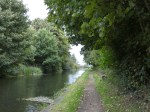
October 2nd -It was a gorgeous autumn day – chilly, but still and the  the sun shone, it was warm on the face. I finally solved a pressing technical issue on the bike, then headed out to Middletn Hall for tea and cake, then up the canal to Tamworth and back through Hints and Weeford. 

It was the kind of ride that makes you realise autumn isn’t that bad after all, and in the golden hour travelling through Shenstone, with the church occupied and a service ongoing, even the looming dusk seemed magical.

September 24th – Near Anchor Bridge on the canal at Brownhills, autumn isn’t much in evidence apart from a chill in the air and a strong wind with a familiarly hostile edge. 

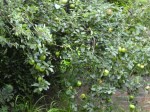
But in a canalside garden, a healthy crop of what appear to be good cooking apples. Bet they’d make a nice pie.

September 4th – A short run out on a day that didn’t go well and on which I felt groggy and ill with a bad stomach, with the exertions of the previous days taking their toll.

So just a spin on an errand to Walsall Wood, but I did finally get to meet the Chandler’s Keep eyebrow cat, who was sat on the bridge embankment and came to say hello.

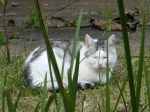
I was also interested in the dozing grey and white tabby in a canal garden in Walsall Wood. He looked very inscrutable.

Any day in which you see cats at leisure is a good day.

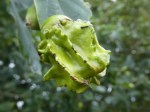
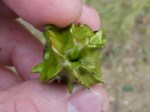
August 22nd – I note a fair crop of acorns this year, and like last, I was caught by false memory with the knopper galls.

I tend to think these parasite-created growths happen earlier in the year than they actually do, and always assume we’re not going to see any when they’ve not appeared by late July. Since they’re caused by a wasp larva hatching in the acorn bud, they can’t occur earlier than the fruit, can they?

The tiny wasp that drills it’s egg in to the fruit bud earlier in the year – coated in a secretion that will corrupt the bud’s growth plan into these curious galls – is pretty unremarkable. But the distorted, knobbly knopper galls are glossy, leathery and fascinating.

Nature can be very weird sometimes.

August 9th – Bind weed is everywhere at this time of year. With the almost pure white flowers and large leaves, this climbing plant is prodigious and often regarded as a nuisance.

That’s a shame really, as it’s another one of those plants that if it was rarer, it would be cherished. It attracts and feeds lots of bugs and bees, and is particularly beautiful.

I was fascinated in the way the one flower had been so selectively nibbled.

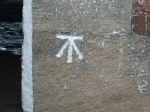
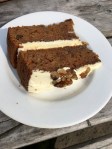
July 22nd – A fast, enjoyable 50 mile ride on an afternoon bunked off work saw me calling at Barton and then Rosliston for excellent carrot cake on a hot, sunny day. On the way, I took in a little of the canal near Barton Marina, and spotted the benchmark in the bridge just by Barton Turn. I think that’s the first I’ve ever seen highlighted with paint and it also seems rather high.

It must be genuine, but I sense a story here. Any ideas?

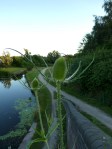
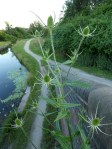
July 18th – I like this a lot. On Catshill Junction Bridge, just on the Walsall Wood side, there is a very healthy teasle plant growing from the brickwork.

It’s now tall, and in bloom. It looks fantastic, and slightly alien, as these plants always do.

A migrant from the wild sowing of nearby Clayhanger Common, we never would have seen these kind of plants here in my childhood. A wonderful, life-affirming thing.

July 13th – Running an errand at dusk, a beautiful sunset, and just after a heavy rain shower, very nearly a surface air inversion with small patches of mist drifting off the canal, but just a little too breezy for it to develop into anything.

The weather has been atrocious lately, but evenings like this – cool, clear and peaceful – make you remember what summer’s about.

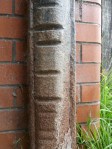
July 11th – Today I noticed an odd little curiosity I’d not spotted before. On the canal at Clayhanger Bridge, the rope guards that were installed on the original bridge were transferred to it’s replacement in 1994.

These rusting metal posts were originally at the vertices of the brickwork on the towpath side of the underbridge. Back when narrowboats were horse drawn, the guards were fitted so that the horse towropes would not groove the brickwork, but the metal instead. The years of boats passing wore deep grooves in the metal, which are a sort of historical witness to the traffic that once passed under here. 

There are very few horse-drawn boats now, and the posts are merely there as an artefact. I note they were fitted slightly incorrectly in that they no longer protect the corners, and their positions have been exchanged (the wear would be on the right hand side of the post in the picture) – but well done to those who rebuilt this bridge two decades ago for preserving a little bit of industrial canal history.

How have I not spotted this before?