January 31st – It’s been a hard weekend. Technology hasn’t been working well, and I’ve not been well with a cold. Today I was better, but felt low, and the grey, inclement weather didn’t help. I decided I needed physical activity, so I turned the computer off and went in search of some colour. 

Thankfully, I found it.

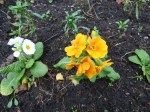
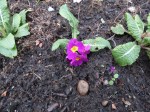
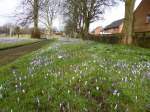
In St. Anne’s churchyard and cemetery opposite in Chasetown, spring has arrived due to the unseasonably warm weather. A single daffodil bobbed in the wind (such that my photos of it were nothing but a blur); easter primroses and calendula were bright and cheering.

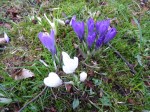
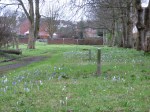
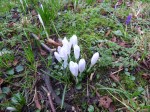
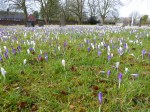
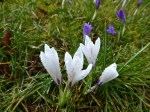
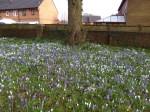
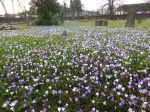
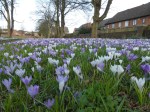
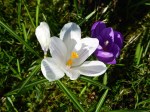
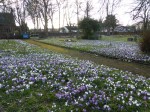
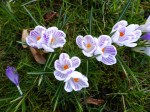
Despite the terrible light and encroaching dusk, I think it can be seen that the usual carpet of purple and white crocuses in the cemetery is just coming into flower.

It’s the last day of January, and I’ve still to see a single solitary snowdrop.

The seasons in the last two years have been mad – I have no idea what’s going on. But thanks to them, my mood was lifted on a very dull last day in January.

May 21st – Laburnum, or golden chain is one of the most beautiful blossoms of the British spring. Vivid yellow green, hanging in strings like some fluorescent downpour, it used to be a lot more prolific than it is today.

There used to be loads of this tree growing in parks, gardens and public spaces – but it hides a deadly secret. 

The seeds of this beautiful tree are deadly toxic, and after several accidental child poisoning incidents in the 80s, many of the trees were cut down for reasons of public safety.

Fortunately, some remain, like this example on the canal between the towpath and the cemetery at Bentley Bridge in Walsall.

March 24th – Compression of the neck… herons are more and more common now. Barely a towpath ride goes by without seeing one, and on longer rides like last week, I’ll see five or six, which must be a symbol of how clean the waters are now and how the fish population must by bountiful, too. 

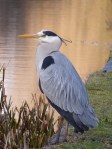
This proud bird was on the towpath in Pleck, just by the wall of Rollingmill Street Cemetery, pretty much the industrial heart of Walsall. Wary of me but not skittish, by dismounting the bike and taking things gently I got close enough for some decent pictures, I think.

I adore herons.

January 3rd – My dislocation was compounded by the darkness. Despite the moonlight, the town seemed very dark and deserted, from the alley at the rear of the church to the footpath over the spot, which I rode over to Clayhanger to visit a pal.

Sometimes I hate the darkness. Sometimes it’s my best friend. Right now, I just wish it would hang back a bit.

Roll on spring.

September 27th – Having visited the farm shop, returned via Weeford and Little Hay. Autumn is really kicking in now, and even on this very dull, overcast day, the colours were lovely. By the drainage lagoon at Thickbroom, you’d never realise you were less than 15 metres from the A38.

The rooftops of Weeford – John Wyatt’s exemplar village, built as an advertisement of his architectural prowess – still fascinate me. From the high cemetery near the community hall, the view is commanding and beautiful.

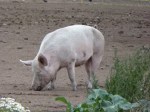
I noted that the land north of Park Lane, between Shenstone and Little Hay is now almost totally given over to free range pigs, snorting and rooting through the brown earth. They must outnumber local residents by a healthy number, and their produce – a quantity of which I’d just bought – is fine and tasty.

I couldn’t help thinking though that if they ever got together and rose up, we’d be under porcine rule within a matter of days… perhaps Animal Farm wasn’t a satire after all.

March 7th – After the despondency of the previous day, spring returned with a fresh passion today. I managed to escape work while the sun was still shining, and headed to Burntwood to pick something up. On the way back, in bright spring sunshine, I happened to glance through the gates of the cemetery opposite St, Anne’s Church. What I saw astonished me: the finest display of crocuses I have ever seen in my life. These are incredible when seen in person, and I commend any reader to go take a look. An astonishing, and beautiful thing. 

Forget what I said yesterday: spring isn’t shaping up too badly right now…

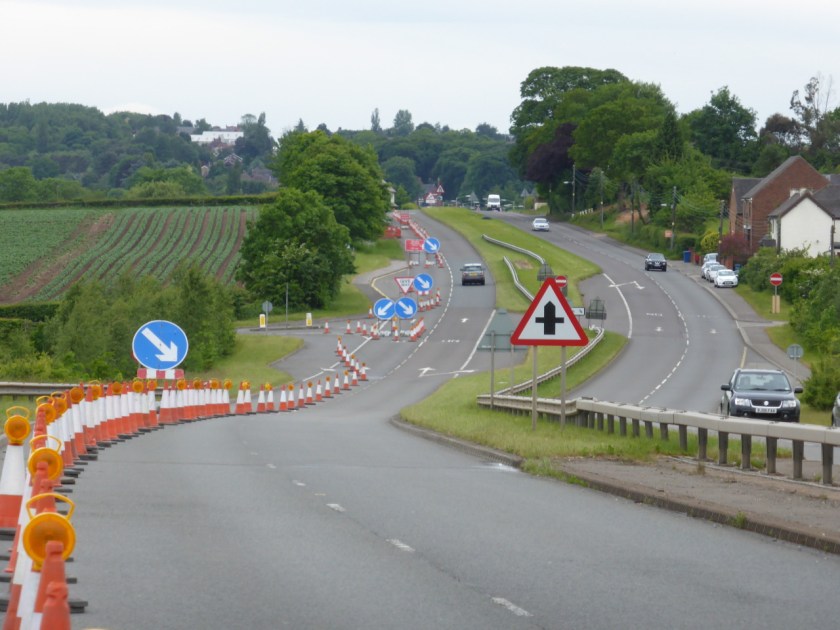
June 14th – Headed out to Lichfield late afternoon, and battled the wind, fully loaded, on the way back. Returning down the Lichfield Road, I noticed the cones were out at Springhill for the construction of a new island junction for Springhill Cemetery, currently under construction to the right of the picture beyond the houses.

This has been delayed quite some time now, and has been locally controversial. it’ll be interesting to see how the development progresses.

January 17th – Some of Walsall’s municipal cemeteries are in a woeful state. Ryecroft can be a bit grim in the less visited corners, Queen Street is disgustingly neglected, doubly so since it’s the resting place of local nursing heroine Sister Dora. James Bridge is no exception – a large burial ground wedged inbetween former factories, waste ground and the canal, it was never a picturesque location. It’s sad to see recently that an adjacent building waste processing plant has expanded operations, leaving relatives of the interred to complain of masonry dust coating the graves. Today, it wasn’t hard to see why it was happening. Why on earth was that noisy, pollutant yard given permission to operate in such a sensitive location?
On a side note, the older sections of James Bridge are amongst the most densely packed I’ve ever seen. There are a huge number of graves here. 

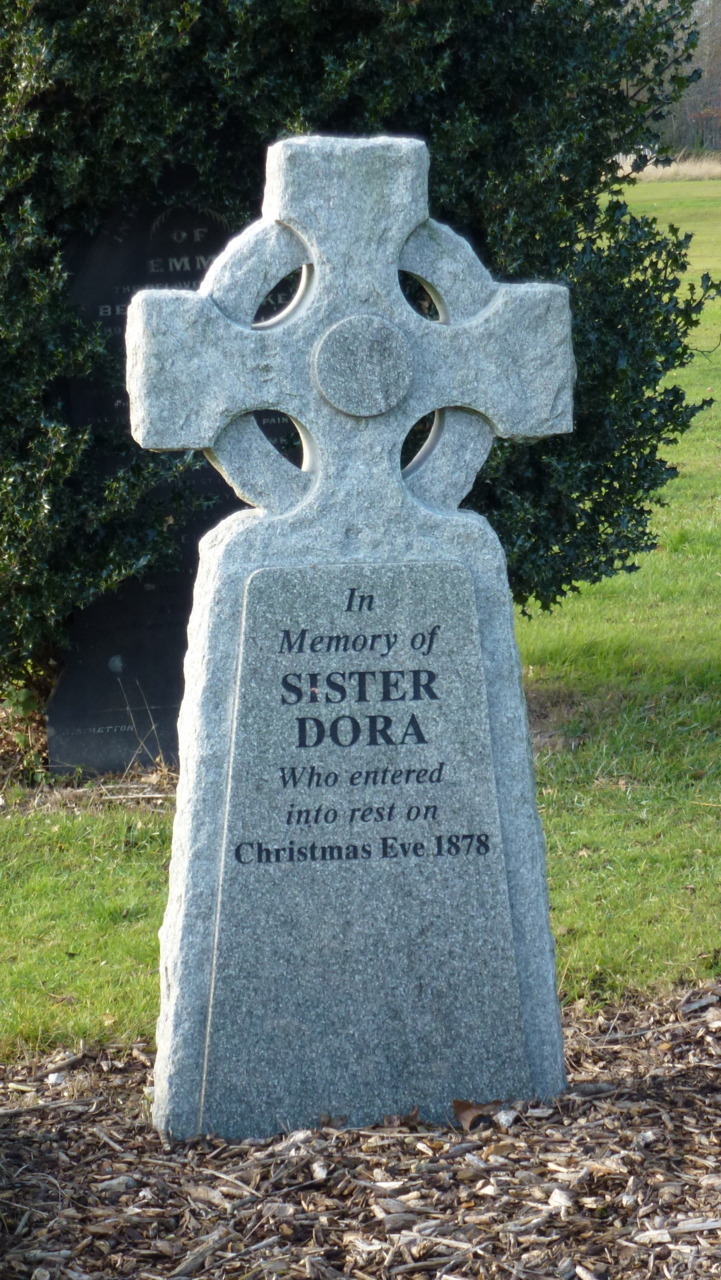
December 15th – Of all Walsall’s notable folk, I think perhaps the most loved is Sister Dora. Dorothy Pattison was one of the first nurses in the town, and she worked tirelessly to heal the sick and injured from industrial accidents and smallpox. She was well respected in her lifetime, and her reputation remains to this day. She’s buried at the sadly dilapidated Queen Street Cemetery in Walsall, in a very low key grave. Her statue stands proudly on The Bridge in Walsall, and as well as giving her name to streets and buildings locally, Dora also gave her name to the town’s mental hospital. 

Wikipedia has this to say about the great nurse:

She was the second-youngest child of the Rev. Mark James Pattison, and sister of the scholar Mark Pattison Jnr. From 1861–1864, she ran the village school at Little Woolstone,Buckinghamshire.

In the autumn of 1864, she joined the Sisterhood of the Good Samaritans at CoathamMiddlesbrough and devoted her life to nursing. She was sent to work at Walsall’s hospital in Bridge Street and arrived in Walsall on 8 January 1865. The rest of her life was spent in Walsall and it was there that in local eyes she became to be compared with Florence Nightingale.

Later she worked at the Cottage Hospital at The Mount.

In 1875, when Walsall was hit by smallpox, Sister Dora worked for six months at an epidemic hospital being set up in Deadman’s Lane (now Hospital Street). During 1876, Sister Dora attended more than 12,000 patients.

The last two years of her life, Sister Dora worked at the hospital in Bridgeman Street, overlooking the South Staffordshire Railway (later the London and North Western Railway). It was there that she developed a special bond of friendship with railway workers who often sufferen in industrial accidents. The railwaymen gave her a pony and a carriage and even raised the sum of £50 from their own wages to enable Sister Dora to visit housebound patients more easily.

In 1877 Sister Dora contracted breast cancer, and died on Christmas Eve in 1878. At her funeral on 28 December the town of Walsall turned out to see her off to Queen Street Cemetery, borne by eighteen railwaymen, engine drivers, porters and guards, all in working uniform. On her death Florence Nightingale paid the following tribute, ‘May every nurse, though not gifted with Sister Dora’s genius, grow in training and care of her patients, that none but may be better for her care, whether for life or death’. Her epitaph read, ‘Quietly I came among you and quietly let me go’.