July 27th – A foul commute in steady rain and a headwind, with the greasy roads I’d experienced a couple of days ago. There was really nothing at all to commend cycling this morning.

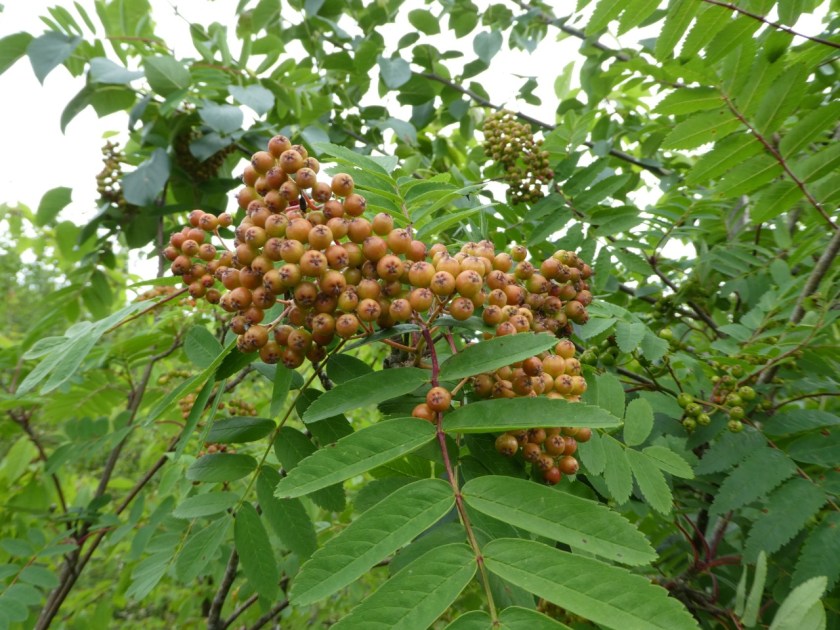
And then I passed the ripening rowan berries, bright orange and glistening with raindrops, and the morning didn’t seem as grim anymore.

I love how nature does that.

July 21st – It’s been a great week of commuting so far. Sunny and warm, without too much wind. I felt the sun on my face, and everything had that great summer air about it you only get in during really warm spells.

This evening, however, was different; it was ten degrees C cooler than on Monday, and the skies were grey. As I neared Brownhills, it began to spot with rain, and I raced home to avoid the thunderstorm we were surely due.

It never came, and neither did the rain.

It’s been a great few sunny days, and if the summer would like to return, I for one will make it very welcome indeed…

July 21st – It’s true that I am one of those characters that amasses a huge amount of trivia and mental flotsam as I go about daily life, and this is one of those things, but in my defence, I was actually asked about this a month or so ago so here you go…

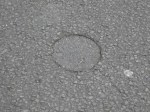
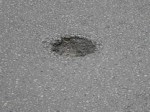
People who study the road surface (and there are a few of us, mainly on 2 wheels) may notice perfectly circular cutouts, punch-throughs or holes in the endless asphalt. Sometimes they’re filled with tar, or white lining paint. Often, they have the material that came out of them put back in like a tarmac divot. Sometimes, they open into potholes, particularly if badly sealed. But what are they?

These odd features are the signature of the road surveyor, and a road near the end of it’s life. When a road is resurfaced, the tarmac is literally planed off by a large cutting machine. The planings are then taken away, recycled back into asphalt, and relaid. How deep that planing operation goes is critical, as is knowing the depth of the road surface, and what it’s like beneath the blacktop ‘crust’.

When a road is considered for resurfacing, a surveyor will take cores with a drill and round cutter at about 100-125mm diameter, and extract them like a cheese taster sampling a cheddar. They are photographed, measured and replaced (or filled). From this a plan of work can be formulated.

Sometimes cores are taken in pairs, close together; others they are equally spaced along the length or a road, on either side. These, spotted around Walsal today, are in various states of becoming potholes themselves and adding to the problem they were created in the process of alleviating.

I’m convinced that every time I learn rubbish like this, it pushes something useful out of the back of my brain.
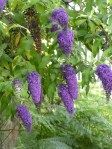
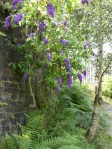
July 20th – People seem to think I’m negative about buddleia, but I’m not really. It’s a beautiful purple shrub that lights up late summer wonderfully, and it’s not known as the butterfly bush for nothing – the Lepidoptera love the huge flowerhead composed of tiny, individual blooms. 

My problem with this plant – if it’s a problem at all – is that for me, it’s a harbinger of urban decay. It’s so successful in urban environments that it’ll grow well in a patch of soot in vertical brickwork. At this time of year, throughout the urban expanses of the UK you can see buddleia sprouting and flowering from derelict buildings, bridges and rail lines. Seemingly one of the first signs that nobody cares for a place anymore is that it starts flowering in purple at high summer.

You can’t blame the plant for that… 

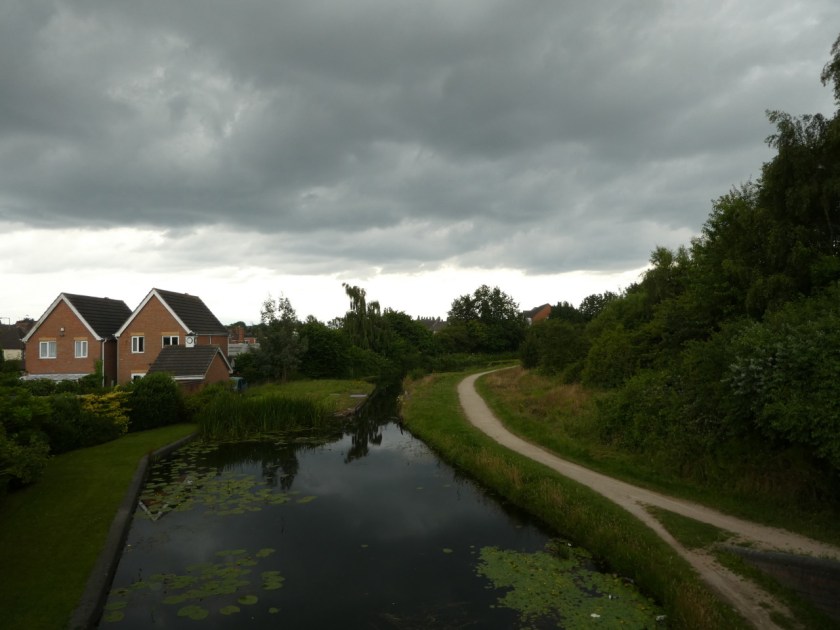
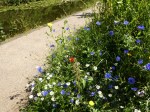
July 19th – I’ve been largely ambivalent about the odd project to resurface the canal towpath between Walsall Town Wharf and the Bentley Mill Way aqueduct. It’s a decent enough job, I guess, but I don’t feel the surface is that much of an improvement, and the loose gravel and untreated under bridges are problematic. But there is something that’s beautiful.

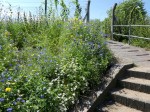
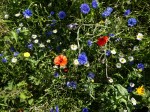
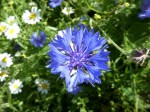
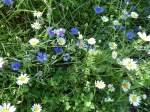
When the contractors remade the retaining walls to the steps at the Scarborough Road Bridge in Pleck, they planted wildflower seeds down the embankment, and at other spaces on the towpath.

This has resulted in stunning little urban patches of sunshine like this, so wonderful on what was the hottest commute of the year so far.

Thank you to whoever, for the act of beauty and foresight.

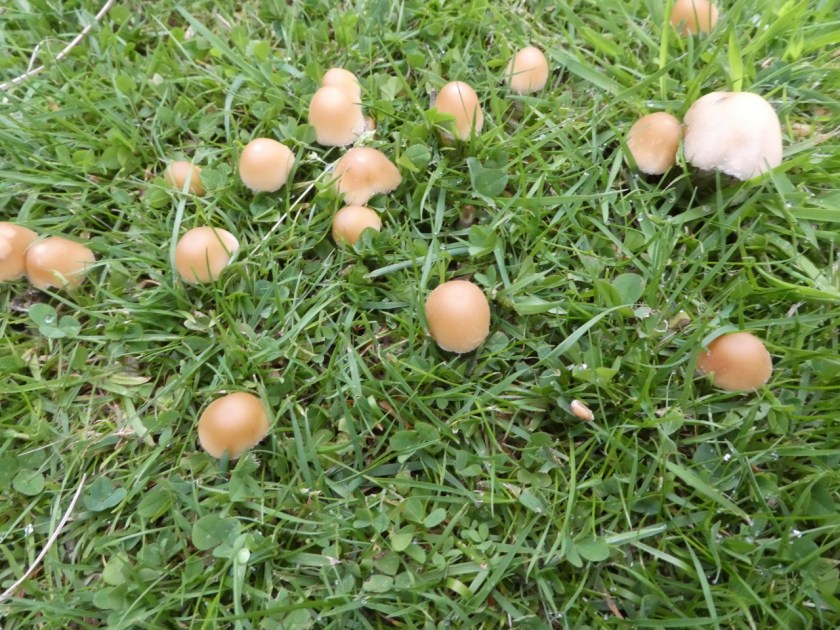
June 15th – Noticed on a grass verge in Wednesbury, this fine crop of toadstools.I think they’re roundheads, but I didn’t have time to study them closely. But you know you’re advancing through summer when the shrooms are out.

I love to see fungus – such a fascinating, misunderstood part of the ecosystem.

June 14th – Spotted on the way to work in Place, this pair of characters. They seemed friendly enough. They mewed at me softly. I assume they’re siblings, or if not, they’re close pals. 

One of the very best things about summer communities on a sunny day is observing the cat population taking the air and enjoying it.

July 12th – Meanwhile, at Jockey Meadows, the coos are getting stuck in, browsing the scrub and spreading the cowpat love. I’m fascinated in their behaviour; they tend to operate in a loose group, and move to different parts of the pasture at different times of day. It’s almost as if they know they have a job to do, and are carefully, conscientiously doing it.

I love these gentle, charming beasts.

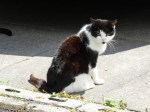
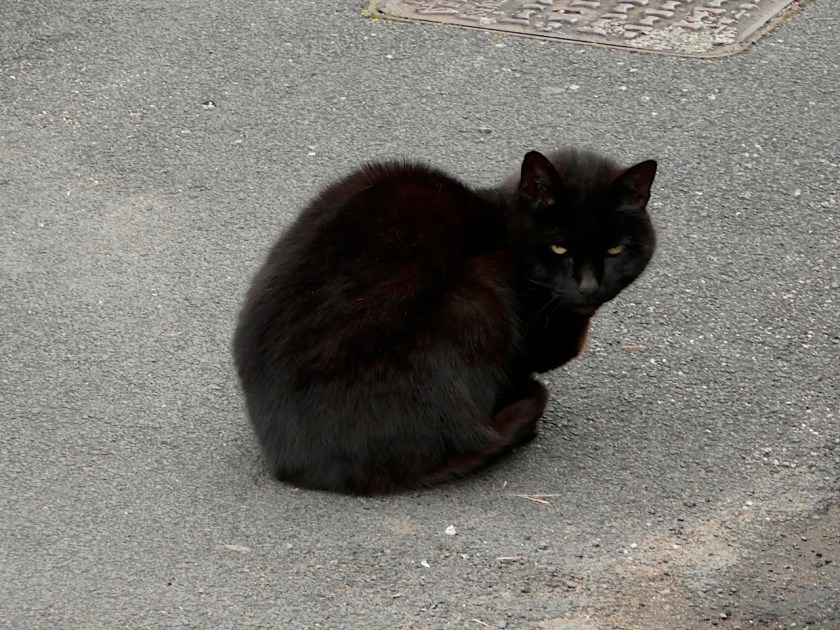
July 12th – I’ve spotted this apparently elderly lady before in central Walsall, near the college. She has a broken tail and a limp but she seems alert, active and very sharp on her feet. 

She hasn’t previously hung about to have her photo taken, and today, as I pulled up gently on my bike, she gave me 20 seconds before she decided to up sticks and run off, glaring at me.

This is a cat with attitude…

July 7th – Summer’s wheel continues to turn, despite the poor weather, and I was shocked today to note that the rowan berries on the trees by the cycleway in Pelsal were beginning to ripen.

One of the earlier berries of the summer, they add a lovely splash of orange colour to the maturing greenery of high summer.

With days now getting shorter, it really feels like the year is advancing fast now.