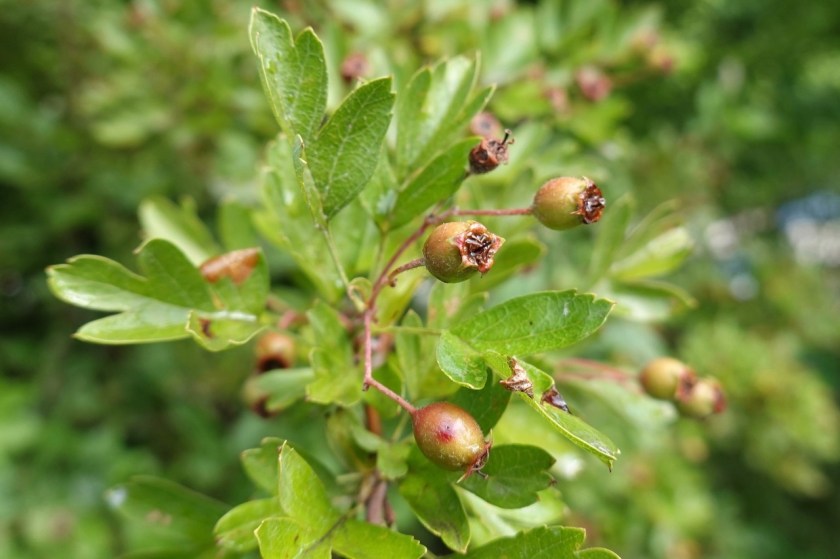
August 1st – I’ve been enjoying watching the progress of the berries and fruits this year, perhaps more than usual. Mainly I think because with the hot, dry weather I expected the harvest to be very poor, yet it’s far from meagre. Most things seem abundant, and it looks like being a good winter for birds with a bumper crop of haws reddening gradually in the hawthorn thickets and hedges.

These tough, hard berries are a good winter food for many birds, loaded with energy but bitter so they aren’t depleted quickly.

Grandad used to say and abundance of berries meant nature was preparing for a harsh winter.

It’ll be interesting to see if he was right.

July 31st – Passing over Catshill Junction on my way home, I stopped to note that it was as beautiful as ever it was, but in this late, hot summer the colours have gone from the bright, verdant green of spring to a baked gold colour, browns and dusty, jaded green. These are more than the colours of a mature summer; they are the colours of an unusually hot, dry season.

I’ve never in adulthood seen a summer like this, and I’ll be surprised should I do so again. It has been absolutely marvellous.

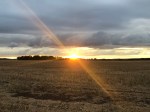
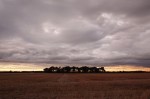
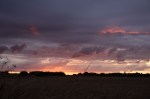
July 30th – Working late at a remote site, I came back through Birmingham and Shenstone to hit the homeward commute just as a beautiful sunset unfolded across the landscape. 

One of the joys of late summer is it’s the season of the sunset, and it was a cracker. There were the earliest hints in the way the sinking, golden sun caught the thick, rolling clouds, and it ended in a banded crimson sky that made the homecoming skyline of Ogley Hay magical.

I’m so glad I caught this.

July 30th – Nipping out of work in the earl m morning on a cafe run, passing a familiar patch of waste ground, I finally found something I’ve been looking for for a few weeks without luck; a robin’s pincushion gall.

This hairy mass on dog and wild roses is, like the knopper and marble galls on oaks, an insect gall; a tiny wasp lays eggs by injecting them into a leaf-bud surrounded by DNA corrupting chemicals that cause this odd growth to form rather than a leaf.

Beneath the bristles, there’s a solid ball of plant matter with cavities within which the larva grow and develop in safety; when ready, like other galls, they eat their way to freedom and adulthood.

The gall doesn’t harm the plant at all. It’s a remarkable thing.

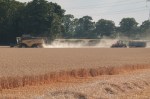
July 26th – The very hot weather seems to be coming to an end, timing almost perfectly with the end of the major session of the harvest. Locally now for a couple of weeks, the grumble and whine of fantastically large and complex harvesting machinery has been a continual backing track to rural life, and often I’ve ridden through clouds of wheat dust from this year’s crop being threshed in the harvester.

Not much spilled this year, which is interesting, the roads are usually thick with spilled grain, called ‘gleanings’ as traditionally workers and the poor were allowed to collect – glean – this harvest bounty and they’d feed it to their animals and fowl.

Interesting also to note the return of the rectangular bale. Well, they do stack better.

And with harvest and the end of the heatwave, the year gallops on…

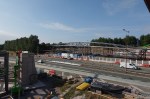
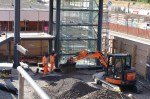
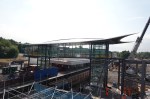
July 26th – At Telford, the new footbridge at the station continues to take shape. Steel is being erected, steps and glazing are being added and lifts seem to be going in too. 

There are now five distinct building sites that make up this construction. Getting to the right one to start work – across a railway, a major dual carriageway and slip roads – can’t be much fun!

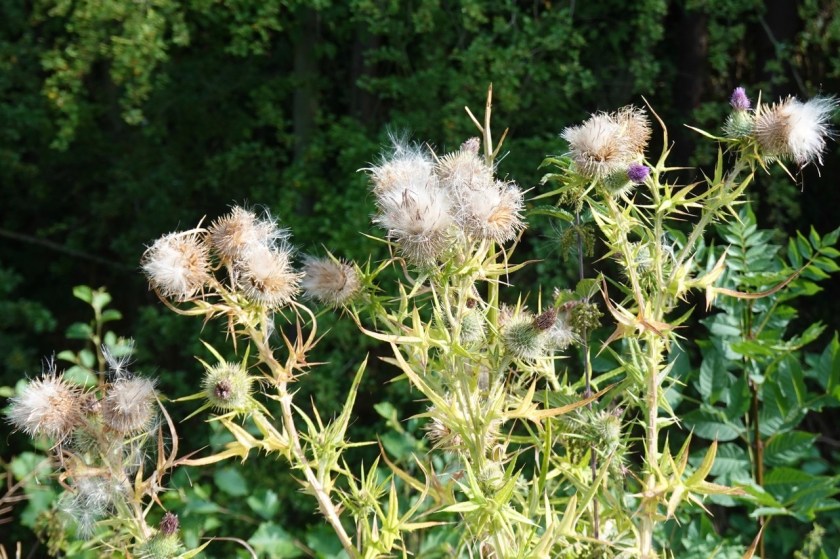
July 25th – The thistles are still in flower, but now going over to seed too. This is great for many songbirds like goldfinches who like to eat the seeds, which are spread from the seed heads by the breeze, and to this end are attached to fluffy wind catchers to transport them in the air.

The fluff thistles generate – along with rose bay willowherb, or old man’s beard which is also in seed at the moment, was always called ‘fairies’ when I was a kid, and it was considered lucky to catch a ‘fairy’ on the wind.

They are actually rather beautiful.

July 24th – Also coming on to show well right now are the rosehips – the fruit of the rose flower, either the dog rose, or the feral scopes that dot the hedgerows, canal towpaths and footpaths of the area.

I love the variety of textures, colours and shapes.

They bring a second splash of welcome colour when the rose flowers  themselves have decayed for another year…

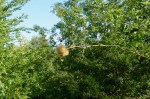
July 23rd – Saddly poor photo of something that caught me by surprise: A wayside pear tree in Clayhanger (I won’t say where) is fruiting very heavily this year, and despite the dry conditions, the fruit look like they’re going to be quite large.

Watching this one carefully, but expecting the crop to be decimated by birds (bless them) as it has been before.