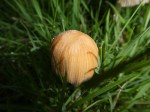
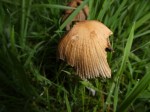
September 26th – ne of the rewards of autumn is the abundant crop of interesting fungi. Passing Clayhanger Common in darkness, I noted that some environmental trigger – damp, temperature, never sure what – has called on the glistening ink caps and they are everywhere.

They start as perfect little ridged caps, delicate and speckled with crystals. They age very quickly, and within 48 hours they open and decay into a black goo, hence the name ‘ink cap’ – and another 12 hours, and you’re hard pressed to find any trace they existed.

Fungi are fascinating.
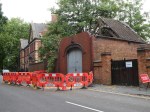
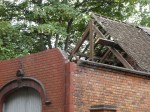
July 20th – Sad to see something seems to have happened to the building off Victoria Road in Darlaston that was once the town fore station – the roof appears to have collapsed.

I really don’t know what’s gone on, but the building seems to have been made fairly safe, but there’s extensive damage to the timbers, and the tiles have mostly been stripped.

Whilst this is a historically important building in Darlaston’s history, I’m a bit torn over the cost of repair – it will certainly cost a lost to sort out, for what is, effectively, an unused garage. But I do feell concerned for it’s future.

A sad sight. 

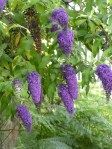
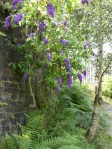
July 3rd – It’s time for my annual heart-wrenching over the purple conundrum that is the butterfly bush. Buddleia is a prolific, very common shrub that will grow anywhere, in any scrap of earth or soot, and is synonymous with urban decay: look upwards in any town right now and you’ll see this tenacious battler growing and flowering from cracks in brickwork, lifting tiles on roofs, blocking gutters, prizing apart chimneys and crowding any embankment, towpath, disused rail line or wasteground.

It’s beautiful and very good not just for Lepidoptera, but all manner of bugs and is very, very pretty. But it is such a symbol of dereliction and decay.

June 23rd – I had to nip to the Holford industrial estate in North Birmingham on the way home from work – I was going to go to Walsall and hop on a train, but it was quicker just to head straight there. Making my way to the station on my return, I spotted this curious sight on the corner of Brookvale Road and Deykin Avenue in Witton.

I can’t make much sense of this – why remove a key part of a building like that? I was particularly taken with the fireplace and chimney still clinging on for dear life.

I sense there’s a story here. If anyone knows, I’d love to hear it.

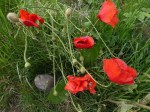
June 9th – It’s the season of poppies, and there are some beautiful examples in the hedgerows, edge lands and waysides locally. I prefer these little clubs in forgotten, neglected spaces. Ragged, at various stages of maturing and going over, these to me are real poppies; dramatic, beautiful, natural, and naturally flawed.

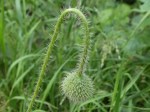
I even love the alien-looking buds, almost prehistoric in their furry splendour.

I spotted these in the sandy embankment just by Shire Oak Quarry on my return to Brownhills.

A true hero of the hedgerow, and a worthy and apposite symbol of Remembrance.

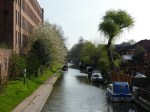
April 9th – The canal through Tamworth is very underrated. Living in the shadow of the River Tame that bisects the old town, there’s a major junction here and some remarkable architecture. 

It’s a shame that nobody’s found a long-term use for the old mill yet. It’s a remarkable building.

July 20th – People seem to think I’m negative about buddleia, but I’m not really. It’s a beautiful purple shrub that lights up late summer wonderfully, and it’s not known as the butterfly bush for nothing – the Lepidoptera love the huge flowerhead composed of tiny, individual blooms. 

My problem with this plant – if it’s a problem at all – is that for me, it’s a harbinger of urban decay. It’s so successful in urban environments that it’ll grow well in a patch of soot in vertical brickwork. At this time of year, throughout the urban expanses of the UK you can see buddleia sprouting and flowering from derelict buildings, bridges and rail lines. Seemingly one of the first signs that nobody cares for a place anymore is that it starts flowering in purple at high summer.

You can’t blame the plant for that… 

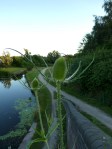
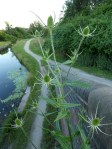
July 18th – I like this a lot. On Catshill Junction Bridge, just on the Walsall Wood side, there is a very healthy teasle plant growing from the brickwork.

It’s now tall, and in bloom. It looks fantastic, and slightly alien, as these plants always do.

A migrant from the wild sowing of nearby Clayhanger Common, we never would have seen these kind of plants here in my childhood. A wonderful, life-affirming thing.

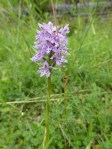
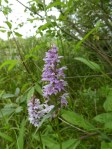
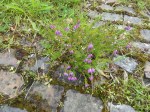
July 9th – Also being reclaimed by nature and teeming with flowers is the Victorian brick lined spillway at Chasewater, and I’m not sure how I feel about it. The flowers and plants – including heathers, mustards, spotted orchids and others – are gradually overcoming the masonry and are beautiful. But this is also industrial history. 

Should it be cleared, even though it’s unused, to preserve it? Or just left to decay, beautifully? I can’t decide.

February 26th – Really not well at all, I did a few hours of necessary stuff at work and crawled home mid-afternoon. I wanted a change, so I came over Church Hill, and stopped to take some photos while up there. 

Church Hill is one of those conundra that I find troubling. St. Matthews is as beautiful as ever, and the views would be splendid were they not obscured by mature, beautiful trees. I want rid of some of them for a better view, but I also don’t…

No sign of the peregrines on the bellcote, but this is the first time I realised you can see the Workhouse Guardian’s offices from up here – and they look better from such a distance, and also, terribly out of place. Marooned.

St. Matthews itself is suffering the rogues of the weather, and desperately needs some love. I hope the CofE can get around to giving this venerable old church a bit of love soon.