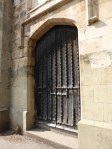
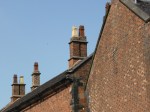
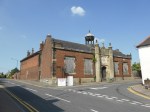
July 7th – Passing through Polesworth I noticed this fine, but decaying building. Not a handsome edifice by any stretch, but impressive, foursquare and imposing all the same. The chimneys alone are gorgeous, never mind the finials, cupola and that incredible door. I had no idea what it was, other than a school, and made a note to find out when I got home.

It turns out it’s the former Nethersoles School, latterly a community centre, and now derelict, awaiting planning to turn it into apartments. The latin above the door – to my broken understanding – says ‘School for paupers and girls’ or similar.

It’s a remarkable thing, and so sad to see i falling to ruin. I hope something can be done with it soon.

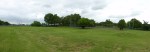
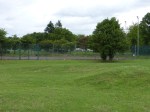
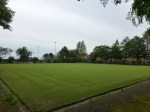
June 22nd – There’s dereliction of a different kind not far away from the land in the last post. Oak Park – the original one, consisting of bowling greens, ferris courts and gardens was originally for the amenity of the local mining community and held in trust. Now, it sits gently decaying like some lost garden ruin next to the 70s leisure centre that bears it’s name. 

Left to rot by a council that no longer cares for it, it’s a sad site that I find tragic and upsetting, not least the overgrown remnants of the BMX track out back, added in the 80s. This was once a grit track, and very popular.

Dereliction of land and dereliction of duty.

April 5th – Oh man, Friday was grim. It had not been a great week, and this day just crowned it. Coming home weary of the wind, exhausted from work and flat from life’s battle, I took solace in leaving Shenstone with the wind behind me. It was getting warmer, and there was just a hint of spring in the air. Pouring myself liquid down the backlanes, I passed Keeper’s Cottage, at Footherley. Gently collapsing into it’s own space, the barn will soon be gone, and I suspect the house will follow. Vadalised, unloved and decaying, this house has been empty for as long as I remember.

It shouldn’t be so. This would make a fine, welcoming family home. It’s a crime to let it just slip away.

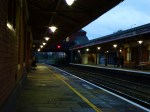
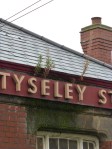
October 31st – A grim commute home. The scent of rain had been in the air all day, and in the afternoon, the showers grew more frequent and intense. At Tyseley, I listened to the rain on the roof with a heavy heart. I don’t mind commuting jun the rain too much, but there was a keen wind and with the dark evenings upon us, enjoyment was likely to be thin on the ground.

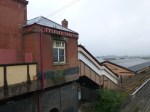
Having missed my train, I waited at a near deserted Tyseley station for the next service. It was dry, but dingy and darkness was falling. This odd little place really has got a hold on me. I’m fascinated by the dark decay of the station, it’s unexplained wooden screens (seemingly doubling as urinals these days) and mock-victorian fittings. It’s quite the oddest station I’ve used; it should feel desolate and threatening, but doesn’t. I can’t work out why it’s fascinating me so much.

October 13th – My town, for better or worse.

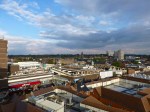
I have a strange relationship with Walsall these days. Pass through it regularly, love almost all of it, but bits I used to know like the back of my hand are now alien to me. Certainly, shopping there is a grim experience these days. I was in town anyway, and wanted to see the Damien Hirst exhibition at the New Art Gallery. I like Hirst a lot, but the exhibition left me cold – I really wanted to see stuff like Mother and Child Divided again, yet what was here seemed to be the odds and ends of the artist’s work. The way it had been mixed in with the Garman Ryan collection was clever, though, and I did admire the guile of the people responsible for doing that, particularly the placement of the wallpaper.

I hadn’t been in the Gallery for a long while, and not on the roof terrace since the building opened a decade before, as when I’d visited, it had always been shut. Today, it was open, and I took photographs of my town – the place I once haunted like a skinny, music-obsessed ghost. I knew every shop, every bar, every alleyway, every cafe. Yet getting older dragged me away, and Walsall befell the same fate as other such post-industrial towns; ravaged by the inexorable rise of out-of-town and fringe retail developments, atrocious town planning and the encroachment of internet shopping,  it now holds little for me. The independent shops have gone, replaced by nail-bars, hairdressers, pound shops and money lenders. Many of the heritage buildings I could see from this view ten years ago are gone, lost to the arsonists that seem intent on depriving us of a cultural past. The bad planning goes on, the retail sheds obscuring or wrecking formerly decent vistas.

I still love this place with all my heart – as Bill Caddick put it, ‘Sore abused, but not yet dead’, but I fear I’m losing it forever. What’s gone, cannot be put pack, and there just doesn’t seem to be the breadth of vision, or cast of hand to build something new. Stuck in a kind of decay-limbo. I could cry.

I did what I always do at times when Walsall, and my past, makes me feel like this: I got back on my bike, cycled up to Caldmore, and reminded myself what community was about.

That’s my Walsall, right there.
September 26th – I’ve spent a lot of time in Tyseley lately, and I have an odd kind of love-hate relationship with the station. Tyseley, as Ive noted here before, is now a heavily industrialised area, and has a mixed air of quiet decay and frantic commerce. The station, with it’s GWR accoutrements and air of very faded splendour speaks of a time when this Birmingham suburb was more genteel and rail was king. Scruffy, rotting and largely unloved, the station sits like a drunken duchess, quiety getting drunk whilst dwelling on past glories in some last chance saloon. Willowherb and buddleia grow from gutters, walls and platforms; the roofs and canopies leak, and everything gives an air of decay. But somehow, I actually think I like the place.

August 23rd – Those who think I’m being negative about the sculptures in The Wood should think about this. This miners trust, a true social relic of the coal era hereabouts created this, the original Oak Park for the village and community. When I was a kid, there were ground staff on site in a depot behind the then recently built recreation centre, and the old park was pleasant and well maintained. Paid for initially, and now held in trust by those who worked away from the fresh air and light, it had flowerbeds, paths, well-tended lawns, a bowling green and tennis courts. Slowly, it has been allowed to decay. The tennis courts lie locked out of use, and are slowly being reclaimed by nature, the paths and flowerbeds overgrown and lost. The neatly manicured lawns are now hastily mown scrub. The only thing to survive is a bowling green, operated by a club, a true social asset. 
The miners left this for us, because they understood the value of light and air. We let it rot, and instead erect rusty metal – of the kind they were all too ready to escape from – in their memory, while our next generation grow more and more obese.
There’s something very wrong in all this. 

July 9th – To be quite frank, I find this depressing. Finding myself in Tyseley again, I keep thinking about this sign. British Steel ceased to exist in 1999. I know Allen Rowland still exist in some form, but to me, this just symbolises the death of British industry. A fading sign for a long gone brand stood at the entrance to a half-derelict train yard, viewed from a decaying station. How very symbolic.

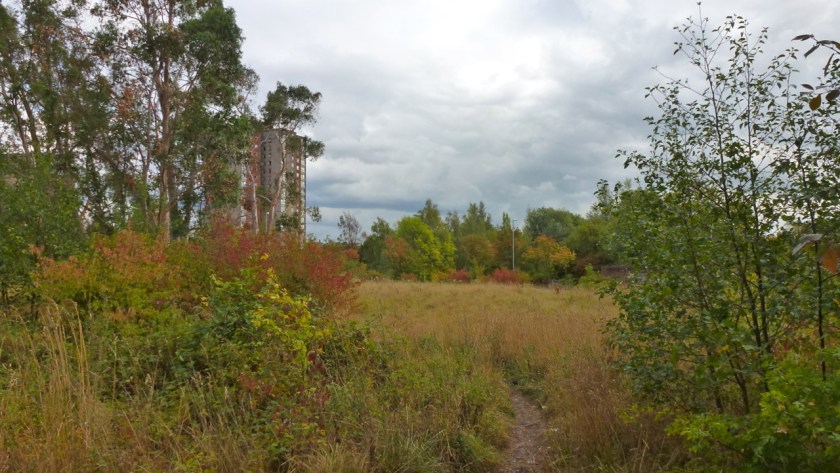
August 25th – an oddly depressing day. A quick spin out to get some shopping in took me to Brownhills. This wasteland is what used to be Silver Court Gardens – once one of the most deprived housing estates in the UK – now demolished over six years ago. Nothing has replaced the homes of the hundreds of people who lived here. Is it any wonder the town is dead? How long will Brownhills have to put up with huge tracts of desolate wasteland?

April 29th – A return along the canal prompted me to photograph this fine piece of history. One of only two listed structures in Brownhills, it used to carry the South Staffordshire Railway over the Wyrley and Essington Canal. It’s now slowly decaying, with large holes in the bridge deck and the metalwork corroding steadily. 

Sadly, nobody seems to want to take responsibility for this unloved bridge. It’s a shame, because I think it’s a fine example of victorian utilitarian architecture – simple blue brick, lightly decorated, totally functional.