August 26th – The day was better, I guess, by virtue of being dry, but when I set out for a tentative ride mid-afternoon it was cold, and a harsh wind blew. It wasn’t a bad October day, I thought.

I’m taking it easy. My foot isn’t completely better, and I thought I’d see how far I could push it before embarking on longer rides again. I looped up to Chasewater, then down to Wall, through Chesterfield and Hilton, back to Lower Stonnall, then home. Apart from a bit of toe-burn, not too bad.

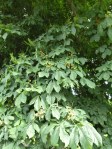
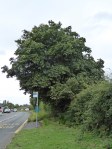
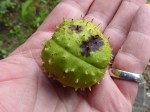
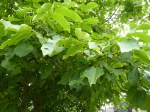
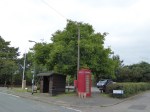
What did impress was the fruits I saw. A terrific year for large, plump conkers; the tree at Edial between Burntwood and Pipe Hill is laden, and although suffering leaf miner damage, has a huge crop this year. In a few weeks standing at that bus stop could be hazardous.

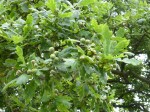
At Wall, the walnut tree has a crop too. After finding it last year, I didn’t expect it to fruit this year too, but it has, with the lime-like ripening walnuts hanging from the boughs. I picked up a few windfalls, which were firm and large. When ripe, the green husks will split to reveal the more familiar brown nut inside. That’s if any survive the squirrels.

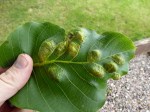
The Walnut tree also seems to have some kind of leaf miner activity. There are ‘blisters’ on some of the otherwise healthy, waxy leaves. I wonder what the bug is?

August 5th – Another saying my Grandfather used to use a lot was ‘It’s always a good year for something.’ On this, the old man – who lived life much more connected to nature than I – was bang on. Every year, every season, is detrimental to something and benificial to something else.

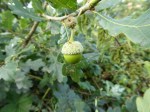
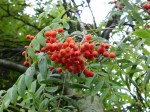
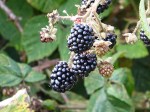
This year we have an absolute wealth of early blackberries. They, sycamore,  horse chestnut and beech appear to have done very well indeed. Oak and fruit seem to have had a very bad year. This is the first acorn I’ve seen – last year, the boughs were heavy with crab apples, damsons, cherries and acorns. This year, very few. Rowan, Hawthorn and cotoneaster seem to be doing reasonably well, though.

I guess it’s just how the weather falls. One late frost and the fruit crops are ruined…

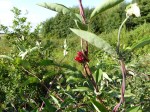
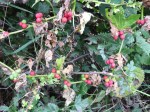
July 30th – It still seems too early to me, but it’s the time of the fruiting and berries now. I’m very familiar with the sticky red berries of honeysuckle – the glaze attracts dust and grime and makes them look grubby – but birds and bugs love them, although they’re mildly toxic to humans.

The white berry here I’m familiar with, but have no idea of the name. These used to grow on the front of a house I’d pass on the way to school, and the berries popped delightfully when thrown at the ground; this is what’s making me think they’re early. I’d have been plucking them in September, at the start of a new term. It’s barely the beginning of the summer holidays right now.

Anyone know their name?

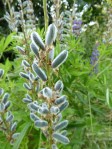
June 30th – With the passage of the early summer, we move from the flowering to the fruiting. Most fruits and seeds will be weeks in development, and not become of anything until late summer and autumn, but many flowers and trees seed early. The lupins by the canal at Clayhanger have long passed their best, but the seed pods they’ve formed, resplendent with downy fur, are a treat in themselves.

The dandelions, of course, such masters of natural engineering, seed all summer through. Such common flowers, rarely studied, but so gorgeous in their perfection.

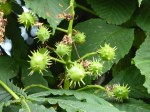
June 19th – Passing through Lichfield today on my way home, I stopped by Festival Gardens to check out the conker trees. They seem to be in fairly good nick, and aren’t showing much leaf miner activity at the moment. They are, however, showing a huge amount of fruit.

I think it’s going to be another great year for conkers. The spiny cased nuts look almost prehistoric to me at this stage.

October 11th – One of the odder fruits of autumn is beech mast. Beech nuts have a pleasant flavour if chewed, with a green, dark and astringent taste; they grow in a prickly, hard rough burr husk that falls from the tree after opening. Since a mature beech is of a considerable size, the mast litter under such a tree is often deep, and has a distinct crackle when you walk or ride over it.

There isn’t a hint of moisture in the husks, which are hard, and they put one in mind of something prehistoric, perhaps the scales of some long-extinct dinosaur.

This example, along with several others is growing along the Lichfield Road at Sandhills. They are lovely trees.

October 1st – One of the relatively unsung heroes of the hedgerow is Hawthorn, or May. It’s dark red fruit – haws – are maturing well now. Full of goodness, they stay in good condition on the branches and provide sustenance for the birds in the darkest depths of winter, when softer, more palatable fruits like blackberries have long gone Just like they will with garden Cotoneasters, blackbirds will defend a laden bush at all costs against other birds, and haws are bitter enough to only be eaten out of desperation.

Hawthorn is the mainstay of most rural hedging, and populates a lot of woodland. It really is the stalwart of the great British hedgerow.

September 28th – I haven’t seen any sloes this year. There are usually some growing in the hedgerows around Engine Lane in Brownhills, near the old Carver building, but they seem barren this year. What I have found, though, is damsons. Similar in colouring and texture, sloes are rounder and form clumps on the bush. Damsons hang individually, on a short stalk, and are vaguely egg-shaped. Sloes can be used in a number of drinks – sloe gin being one, where as damsons are more versatile and tasty enough to be eaten as a fruit, make jam with and so on.

However, growing on Engine Lane as they are, next to a notorious landfill and on former industrial land, it’s no wonder they are rotting on the ground. I certainly wouldn’t eat them, but nice to see.

September 5th – A hectic, mad day. I started in Telford, then shot back to Tyseley, then over to Darlaston. I didn’t get many photos, but this lone apple tree intrigued me. Laden with fruit, on the embankment of the motorway at Telford, it is some way off the cycle path that runs beside the M54. Clearly not planted deliberately, as it appears to be the only one. The fruit are growing are untouched, save for bird-pecks. I wondered, idly, if it had grown from the seed in an apple core tossed away by a driver, or perhaps a passing cyclist.

Guerrilla planting of a different, accidental kind.

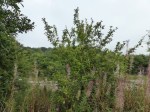
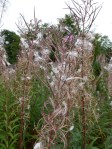
August 23rd – Spinning out through the countryside, I noticed how many plants and trees are fruiting – rowan, oak and many I don’t recognise. The willow herb is seeding, too, and it’s easy to see why it has the colloquial name ‘old man’s beard’. It’s very hard to escape the fact that autumn is now on my heels. A sobering thought.