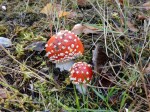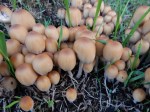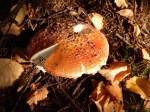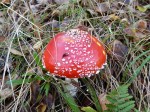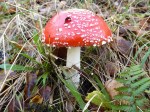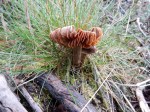
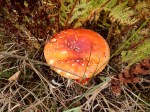
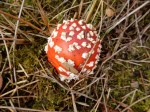
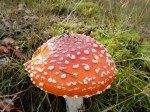
October 25th – The fungi are still going strong. On the common I found plenty of fly agaric at various ages, from globular and spotty fresh young caps to plate-like washed out pink and smooth. I also found a shroom I didn’t recognise, and had to look up. This is certainly a cortinarius, either cinnamon or bicolour. They’re a lovely chestnut, almost chocolate colour, and the gills are fascinating.

I’ve never seen them before and my big book of fungi says they’re fairly rare, so I’m quite pleased spot them.
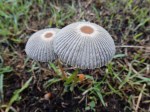
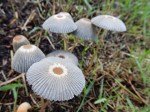
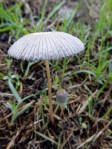
October 8th – I was right about the rain and the fungi. On Clayhanger common in the morning, pleated ink caps, sometimes known as the Japanese parasol. These delicate, paper like caps only last a day, and 24 hours later, there will be no trace. They appear straight after heavy rain, their spores lying dormant until triggered by nature.

The fly agaric are also going for it. In Pleck on the canal bank, a nice crop which will surely proliferate now. Such lovely fairy-tale toadstools.

October 7th – I was right about the rain and fungus. At the weekend I bemoaned the lack of interesting fungi, particularly fly agaric, and suspected the dearth was due to the dry weather.

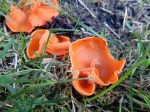
Cue the rains of the last couple of days, and hey presto! – A huge forest of glistening ink caps has popped up on Clayhanger Common, and the orange peel fungus I spotted a week ago has, after spending days dormant, opened out.

Rain may be an annoyance for me, but it has been needed for a few weeks.

October 4th – The fly agaric are a bit thin on the ground this year, probably due to the dry autumn. I only found two in my favourite spot on the canal, and they had both been nibbled.

I love these toadstools. I hope that if we do have rains this week that the grow in profusion like previous years. There’s something magical about them.

September 23rd – And there are other autumnal riches, too. These glistening ink caps are growing on a recently cleared area of towpath on the canal at Clayhanger. 

I love how the damage to the cap reveals the gill structure of the fungus. Another couple of days and these will have decayed to black slime.

Fungi are fascinating.

September 8th – It’s nice to see the fungi coming through now – I love this feature of autumn. Many folk don’t realise, but toadstools, balls and polypores are just the bloom of much larger organisms living out of sight. They really are unlike anything else in nature.

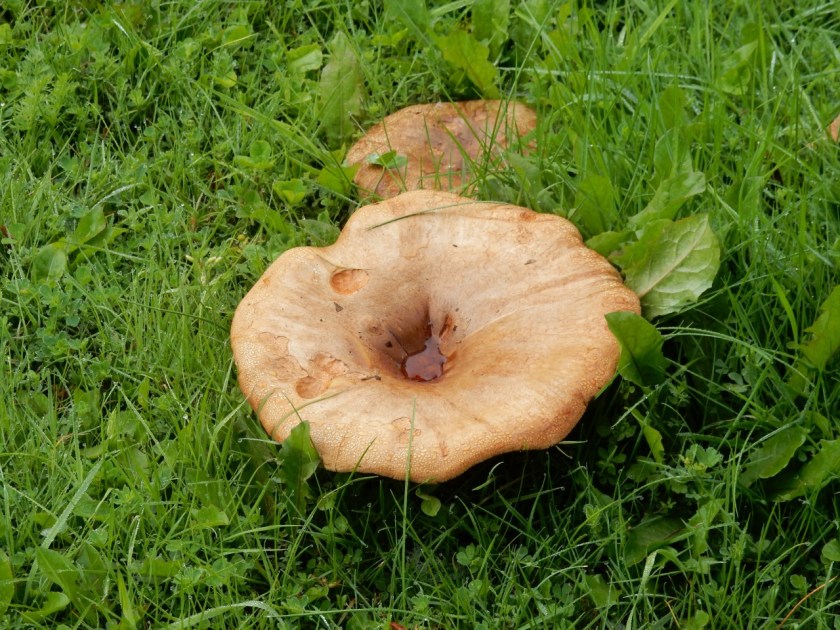
This roll-rim was growing on a grass verge in Wednesbury and was about eight inches in diameter. They start flat and become funnel-shaped as they age: it was a misty, wet morning and this one was gathering condensation well.

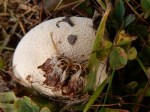
August 2nd – Victoria Park, Darlaston, and a sign of the advancing seasons awakens me to the idea that summer is ebbing away: earthball fungus, looking pristine and fresh growing well in the grass.

Relatives of the better known puffball (indeed, some call the pigskin poison puffball), earthballs have no aperture to let the spores escape, they merely collapse when ripe and allow the wind to do the rest.

They are mildly toxic and can cause bad reactions, including a very bad stomach and allergy-like symptoms, such as rhinitis.

Fascinating fungus though.

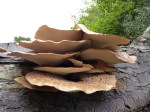
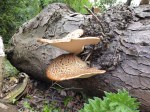
May 16th – Everybody go home, I’ve found the king of the polypores.

This is wonderful. A felled tree by the roadside near Cat Holme, and upon it a whole host of bracket fungi. The main clump must be 30 inches wide, and 12 inches thick. It’s the largest and healthiest looking polypore bracket colony I’ve ever seen – fresh and perfect.

I was unaware they even grew at this time of year. You learn something new every day.

November 19th – I forget every year how good Telford’s roadside verges are for fungi. On the backroads and industrial estates were people rarely walk, the mycology goes undisturbed, and a huge variety grow.

On a cold, dew-laden morning, a variety of Melanoleuca, a large family of toadstools which are beyond my ability to tell apart. I love the bleach-white gills, and the way they’ve split under their own weight.

November 12th – The fungi are still going well, particularly the fly agaric which are particularly prolific on the canal embankment right in the heart of urban Pleck – some gorgeous specimens from young to old and weathered. 

Knowing Pleck I’m surprised they haven’t been either consumed or squished…