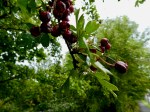
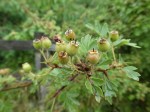
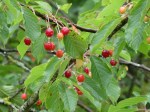
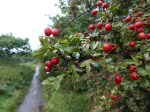
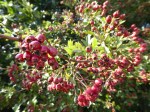
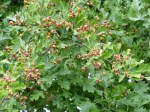
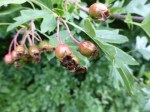
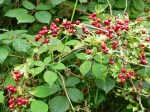
August 15th – With all the sun we’ve had, the haws – fruit of the hawthorn – are reddening up well and in copious supply. These hard, bitter berries will last right into the winter, and although not a first choice of most birds, they will sustain many when preferable food sources dwindle.

They also provide a lovely splash of noble colour to the late summer and autumn hedgerows.

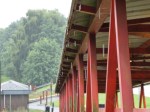
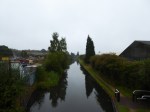
August 9th – But later, I had to go to Telford, and whilst the air of melancholy remained, I couldn’t remain miserable. The weather was heavy, but there was beauty in it, even in the doomed footbridge at Telford Station, which despite it’s faults was a lot drier than the New Street Station I’d come through earlier.

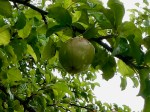
Berries and apples glistened with raindrops. Water dripped from leaf and roof. It was quiet, but softly musical.

The rain doesn’t care for my despair.

However bad the weather, life must go on. And so it it does.

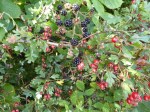
August 1st – So, it’s August and we’re coasting steadily through high summer into autumn, as signified by a rash of sudden fruiting; the harvest has started and has been paused due to rains – but everywhere, blackberries are darkening, apples are swelling, berries are becoming plump and all manner of hips, haws and funny are maturing nicely.

On my way to work on a pleasant, sunny morning, I noticed the crimson red of hawthorn berries darkening in the hedgerows and thickets. Bitter and woody, these berries will last long enough to carry many songbirds through winter.

I just have no idea where this year has gone…

June 28th – A miserable wet day, but thankfully, I mostly managed to avoid the worst of the rain. Although not great for me, it’ll be good to swell the rapidly growing fruits by the wayside.

How quickly we move to the fruiting phase of summer: Rowan berries, cherries, haws and all manner of delights are now developing steadily and beginning to ripen.

A genuine delight on a dreadful morning, but where the hell is summer slipping away to?

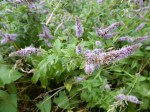
August 16th – Feeling better, I pottered off to Aldridge to do some shopping on Sunday afternoon. On the canal near Northwood Bridge, an unusual sight; a dense, thick patch of what looks like miniature buddleia, but is in fact wild mint.

It smells gorgeous, and the bees are loving it. I never knew mint had such gorgeous flowers.

Meanwhile, near Clayhanger, another reminder of Autumn: Haws ripening well. They look plum and will see many songbirds though winter, with luck.

August 25th – A wet, miserable bank holiday Monday. This was the wettest, coldest one I think I’ve ever known. I always find this day depressing; it’s the last holiday before Christmas, and for me, seems to flag the end of summer. A week later, the kids will all be back at school, the nights will be drawing in even more, and the sun will lose it’s warmth.

In short, we’re advancing to Autumn at a fair lick now.

I rode out mid morning during a lull in the rain, and spun around Brownhills and Chasewater. The fruits, glistening with rain, were gorgeous, and the heather is particularly beautiful at the moment. The still green embankments and hedgerows cut a bright dash through the gloom.

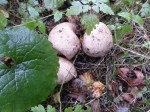
I did note puffballs on the old railway off Engine Lane, another harbinger of Autumn. 

At Chasewater, the valves are fully open and the waterlevel is dropping quickly. I wonder if there’s a purpose to this, as the canal is clearly full to overflowing.

A grim ride on a grim day. Brace yourselves, summer is closing out now.

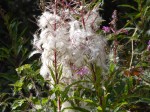
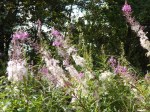
August 23rd – I had to pop into Aldridge on an errand, and so I took the canal. There’s an autumnal nip in the air, and everything is ripening. A fine crop of elderberries, blackberries and haws will make some fantastic pddings and wine, and the rosebay willowherb is demonstrating beautifully why it’s know as ‘old man’s beard’. 

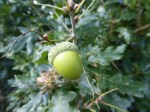
The only disappointment is the acorn crop, which is very, very bad. Only the second tree I’ve seen with any fruit this year – oddly, the acorns that grew are fat and in excellent shape, but the tree is mostly carrying the dead buds of undeveloped fruit. Most odd.

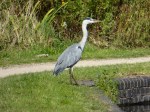
And then, that heron. He’s persistent, I’ll give him that. A fine bird.

October 1st – One of the relatively unsung heroes of the hedgerow is Hawthorn, or May. It’s dark red fruit – haws – are maturing well now. Full of goodness, they stay in good condition on the branches and provide sustenance for the birds in the darkest depths of winter, when softer, more palatable fruits like blackberries have long gone Just like they will with garden Cotoneasters, blackbirds will defend a laden bush at all costs against other birds, and haws are bitter enough to only be eaten out of desperation.
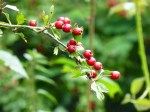
Hawthorn is the mainstay of most rural hedging, and populates a lot of woodland. It really is the stalwart of the great British hedgerow.

August 20th – another fruit that’s set to be in abundance this autumn are haws, the berries of the hawthorn. Bright red, bitter and woody, they’re not toxic and can make decent jams and wines; but to me, their primary purpose is to provide sustenance for the birds, who flock for their goodness in winter. At the moment, these copious tiny berries are orange-green, and these fine examples were spotted in the hedgerow at Green Lane.

Enough sun and they’ll be pillar-box red, another fine sight and indicator of the passing year.

September 20th – A busy, draining day. I had urgent and unexpected stuff to attend to in Redditch, so headed out early. Expecting a quiet journey, it was horrid, and the task I had to undertake didn’t go smoothly either. At 11:30am, I left Redditch and had to go to Tyseley, so to get a bit of perspective I cycled up the Arrow Valley cycle route back to Redditch Station. It’s interesting how, even in this most unusual of years, some things have prospered. One of those things is hawthorn. Everywhere I go, hedgerows and trees are laden with deep red berries. Some say this is the sign of nature preparing for a hard winter.

The fruits themselves are edible but quite bland, and not actually berries at all; they are pomes, the same structure and type of fruit as apples. Haws are said to have health and fertility promoting properties, and can be used to make wine or jams. Birds love them, and will survive on this plentiful, sugar-laden bounty during the long months of winter.