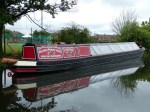
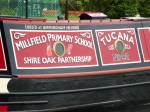
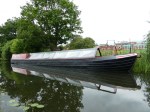
June 19th – I note that the long expected narrowboat rebuilt for Millfield School in Brownhills – the Tucana – has finally arrived at Millfield school, looking rather splendid.

The mooring jetty has been here and largely unused for a few years, and rumours of the boat have ebbed and flowed, but it’s finally here and presumably now, schoolchildren will be using it, which will be great – after all, canals, canal freight and boats are a large part of local history.

I note the boat is now part of a partnership involving Shire Oak School too – I love the logos.

It’s a lovely thing indeed, but I do wonder at the cost…

January 23rd – Nipped out to Aldridge to bag some shopping just before tea – and got caught by the rain. Sadly, this photo of the pub everyone knows as The Elms, on the central island in Aldridge, is the only one that came out usable.

The pub was known as The Elms for years and then in the 90s, a refurb renamed it ‘The Brasshouse’ much to the ire of locals; after a few unsuccessful years, it reverted back to The Elms – and now, following another turd polish, it’s The Crown.

It’s a mystery to me why big pub companies think taking a landmark pub and renaming it in opposition to the views and history of the local community is ever a good move – it’s a certain way to build hostility.

Bizarre.

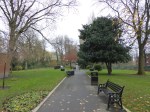
December 14th – There’s a small stub of driveway or track off Old Park Road in Kings Hill called Kings Hill Field. I think once, it went right across the park to the Darlaston Road, and I suspect it’s the remnant of an old right of way, now curtailed by the lovely Kings Hill Park. There’s a small row of terraces, and the gates to the park; and in the right light, by chance, it looks beautiful.

This is why I love this place.

March 11th – It’s nice to see history preserved well. In Walsall, at the top of the old Bradford Street, there used to stand Walsall’s old, dingy general hospital. When that was replace in the 1990s, part of the building that was most historic – the Victorian Outpatients Department – was preserved. New flats were built on the rest of the side, and adjoined to the older, converted building.

Dark, foursquare and made of very, very red brick, it’s a imposing but wonderful edifice.

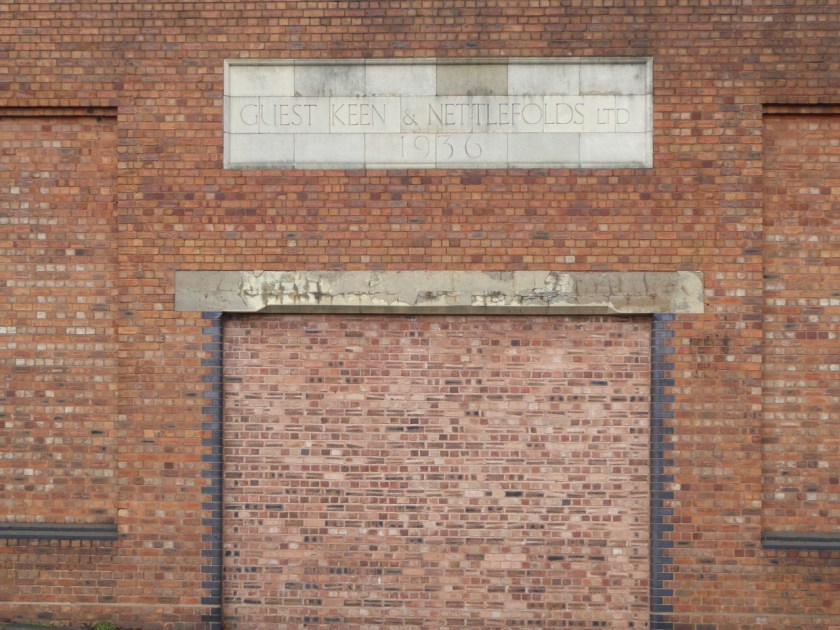
February 23rd – On a factory wall in Darlaston, a plaque recording the name of Guest, Keen & Nettlefolds, and a date of 1936. This was GKN, in their heyday, just before the outbreak of war. This place may now be a shadow of its former self, but this is a history Darlaston can be proud of: screws, nuts and other fastening components came out of Darlaston by the million until the late 1970s, and held the engineering of the world together.

GKN have long since gone from here, but some of the products they made are still created here by a German company.

Today, Darlaston’s industry hangs by a thread, not upon it. But these streets still resound to the sounds of industry living and breathing – and it still makes me proud to experience it.

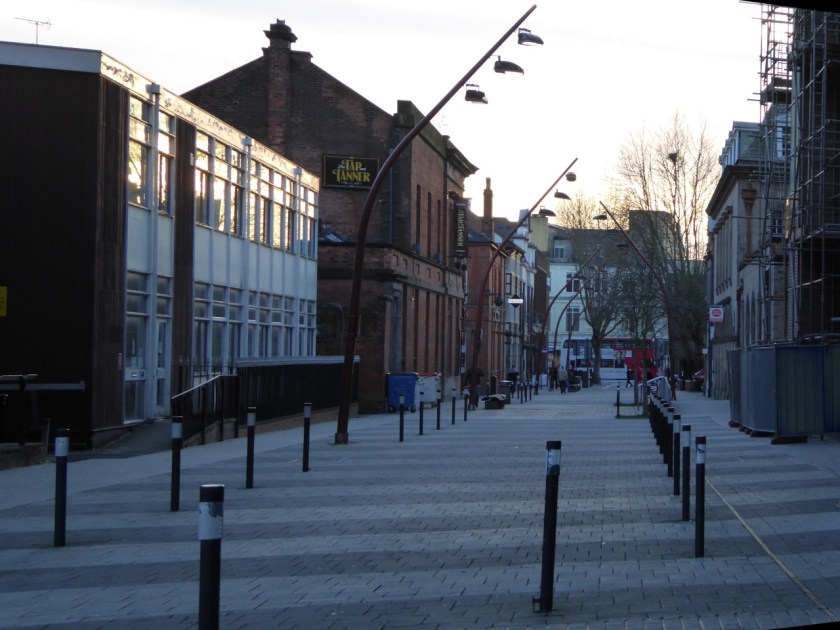
January 17th – Rotate ninety degrees sunwise from the bell tower, and there’s Darwall Street in a precious golden hour. This is the risibly named ‘Civic Quarter’ which, as home to several large bars, is more properly thought of as the centre for Walsall’s night time economy. 

Ignoring the odd aberration, most buildings here are historic and repurposed; an old cinema – The Imperial – is now a pub, as is the former Registry Office. Walsall swapped certificate and celluloid for a pie and a pint.

Apart from the jarring paving and hideous street lights, this is a nice spot, with plenty of history and physical geography not too far away.

Behind the buildings on the left, the Ford Brook leaves cover and skulks through town in the open for a short while, often stinking the place out. It’s a major tributary of the Tame, and will never lead to Walsall threatening the tourist trade of Bourton on the Water.

It’s not a bad town, really. Just badly misunderstood. Sadly, most grievously by many who live here.

November 20th – In Kings Hill Park in Darlaston, there’s a lovely recent sculpture. Paid for by lottery funding, it represents the resurgence of nature post-industrialisation, and the globe of leaf and bird silhouettes is stunning. 

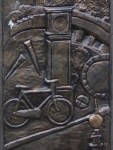
Each side of the supporting plinth is a cast metal relief depicting aspects of local history and life; industry, the zeppelin raid, football and other iconic aspects of Darlaston culture. I particularly liked the bike and horseshoe nails.

It’s a commanding and fascinating thing in a great location, and I could look at it for ages. So much better than a lot of such commissioned work, this has a real feeling of being of its community, without feeling contrived, or art-by-numbers.

The fact that it took real artistic skill to create also helps.

A fine thing.

September 6th – I popped into Lichfield on a grey afternoon for a bit of shopping, and noticed that the Panache Restaurant, which had garnered appalling food safety ratings in recent months had closed and seems to have the builders in.

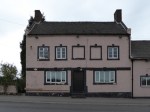
This was one the Three Tuns pub, and one of three pubs in close proximity on Pipe Hill, the other two long since gone.

This is clearly quite an old building that has undergone much change over the years, and I would hate to see it lost.

I hope the next phase of this venerable pub’s life is kind to it.