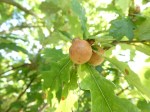
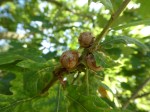
September 11th – I had promised no more wasp galls. Sorry, just one more I missed. 

I’ve been looking at this type of gall for ages and not realised what they are – a small, coffee-bean sized growth, caused by genetic mutation provoked by an injected tiny wasp’s egg. These small, rough galls are tiny compared to the more familiar marble oak galls which are smoother  and rounder.

They function in the same way though, as a growth pod and foot source for the wasp larva that hatches within, and when ready, the wasp will eat it’s way out to freedom.

This poor tree at Darlaston had knapper galls, marble galls, common galls and cola nut galls. And plenty of acorns!
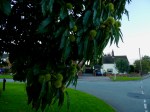
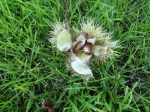
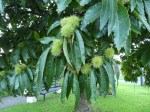
October 10th – Another abundant crop is the sweet chestnuts on the tree at the bottom of Main Street, Stonnall, which are now ripe and falling to the ground. This is always a productive tree, and the soft, downy insides of the husks contrast with the intensely spiky, hostile exterior, but it does look oh so cosy to be a sweet chestnut. 

As usual, the nuts are not big enough to eat, as the fruit doesn’t grow well in the British climate, but the tree is stunning and an interesting, handsome curiosity.

March 18th – A bit of a tip for the Brooks saddle owners with a sheared tension bolt, as I suffered last week.

If your saddle hasn’t stretched much, it can be particularly hard to get the replacement bolt in – in the factory, the saddles are stretched on a hydraulic jig, so fitting a replacement can be a struggle to the home mechanic.

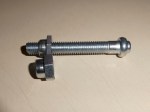
The problem is made worse because the pin isn’t threaded all the way up – and an extra 2mm of thread could make all the difference, and did on my saddle.

To make fitting a replacement easier, I took the adjusting nut from the new pin, and turned 2mm off the head on the lathe at work. It’s a steel nut, so there’s plenty of material left, and that 2mm allows the nut to be wound back clear enough to fit the pin with minimum leverage.

If you have this problem and don’t have access to a lathe, just find a handy local engineering company where someone will probably do this very quick task for a pint.

It could make the difference between doing the job yourself and having to return the saddle to Brooks.

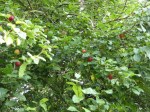
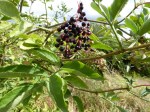
August 10th – A remarkable season, and now the fruiting begins in earnest. The wind was gusting hard, and the threat of rain not far away, but I slid out mid afternoon in defiance of Hurricane Bertha (spit). I let the wind blow me along the wet canal to the cyclway over the common – on the way, I noticed what I think are cherries growing ripe on a tree by the Pier Street Bridge. They look rather fat and large to be such gems in Brownhills. Can anyone help there?

There’s also been a remarkably prodigious crop of hazelnuts from the hedge thicket opposite the Watermead estate – but what wasn’t already squirrelled was blown down in the wind; the towpath is thick with nobbled and wind-fallen nuts.

On the cycleway, a similarly bountiful crop of blackberries, and the elderberries too are ripening to a beautiful black-crimson gloss.

Summer coming to an end is always sad, but how can one remain so in the face of such wonderful fruits?

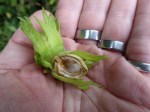
August 12th – rounding the bend in the canal opposite Brownhills Canoe Centre, I noticed some debris on the towpath under the hazel thicket that’s grown so well there in recent years. Taking a closer look, I realised that the detritus was partially eaten hazel, or cob nuts, stripped by hungry squirrels. These are a fine, nutritious snack for our furry pals, and birds and foxes will Hoover up the remainder. I always wondered why I’d never seen these bushes fruit…

September 12th – A day of fearsome winds, seemingly crafted on Satan’s back doorstep which tormented me all the way to Great Bridge. Fortunately, the wind honoured it’s bargain and blew me back up the canal through Moxley and Darlaston to Walsall, and it was in Moxley that I spotted something I never noticed before; right in the centre of this industrial, urban place, there’s a row of Hazel trees which are currently fruiting large hazelnuts. The squirrels are having a ball and discarded, nibbled shells litter the ground beneath. This is a truly remarkable thing – Moxley was once a very polluted place, and this is a sign of an improved environment. I’m still stunned, to be honest.