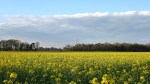
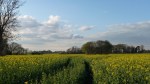
April 19th – Returning from Lichfield, I was still managing to avoid the showers. Everywhere seemed damp, verdant and growing. Birds scuttled in an out of the hedgerows, rabbits darted into ditches and roadside warrens. Crossing the M6 toll at Summerhill, near Sandhills, the weak sunlight captured a field of oilseed rape near Stonnall, lit the whole thing up and made it precious. Some moments catch the light like diamonds.

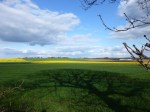
April 5th – Spring is in full throw now. The trees are coming into leaf, early rapeseed is flowering and despite the cold wind, the sun was warm on my neck. Trundling back from the Chasewater Transport Show, I noted one of my favourite sights was coming into being – a weeping willow over water. Such a beautiful thing, and a real sign that better days are on the way. Home or Lanes Farm at Sandhills looked gorgeous with its patchwork of rolling fields. People who say Brownhills is ugly really need to get out more. 

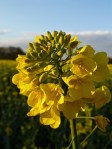
April 5th – There seems to be an awful lot of early-flowering oilseedrape about at the moment. The normal varieties seen in the fields around Shenstone, Stonnall and the outskirts of Brownhills flower around mid-May, but I’ve noticed in the last twelve months late and early strains, like this field near Footherly. It’s a gorgeous plant, I love the colour, the scent and the the bug life it attracts. This oil-rich brassica (that’s right: it’s a member of the cabbage family) must earn a lot for farmers, and seems to be quick and easy to grow. It often receives a bad press, with people blaming the plant for hayfever outbreaks, yet it’s pollen – evolved for insect and contact rather than wind pollination – is far too heavy and sticky to be wind borne.

March 22nd – Nature is well awake now. Spring has come too far to turn back. The days are warming up, lengthening out and feeling better all the time. The most important thing, though, is that the flowers have appeared. All over our area, early oilseed rape crops have smatterings of yellow bloom, magnolias are reaching for the sky and daffs dance in the breeze. All around nature is just crying out for your attention…

July 31st – Harvesting of the oilseed rape crop was nearly complete at Home Farm, Sandhills, when I passed by on the canal. I watched for a while as the hugely sophisticated John Deere combine harvester neatly cut and threshed out the seed from the husks and chaff of the plant, spitting out the chopped remnants to be ploughed back into the soil. This is a very efficient machine and they are very expensive to buy. Note that the familiar comb wheel at the front isn’t used during the cutting of this crop, it’s neatly severed by a cutter at the front and falls onto a screw mechanism behind.  A work of engineering genius.

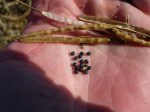
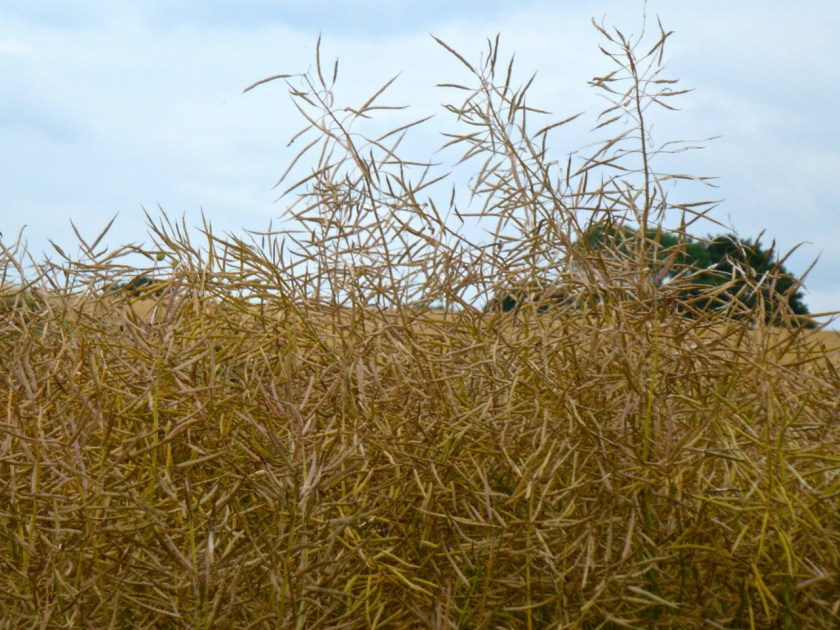
July 24th – I would expect that if the weather holds, the harvest will begin in earnest soon. Near Shenstone, the rapeseed either side of their path to Footherley is bone dry and very ripe. Full of bugs and animals, pretty soon this field like so many others will be stubble, and then ploughed again. It’s odd to think that all the drama of the vivid yellow flowers, the scent, the visual assault… all for a tiny black seed, laden with oil.

July 20th – Usually forgotten after it’s dramatic yellow flowering phase, the oilseed rape is nearing ripeness. People often think the scruffy, dead looking spiky plants are failed crops – but each of the fine pods contains numerous small black seeds that contain a rich, high-energy oil, useful for food and biofuel. The crop is harvested and flailed by combine harvester, the seeds taken away for pressing. A very modern crop.

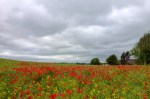
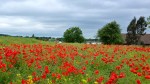
June 15th – It’s the time of year that the poppies bloom, often as pictured here, in fields of oilseed rape. The beautiful red makes for a dramatic contrast with the background yellow-green substrate. This field, at Lower Stonnall, is rather gorgeous.

The image of the hedge-line also demonstrates the importance of hedgerows in combating soil erosion. The old guys who planted those knew exactly what they were doing.

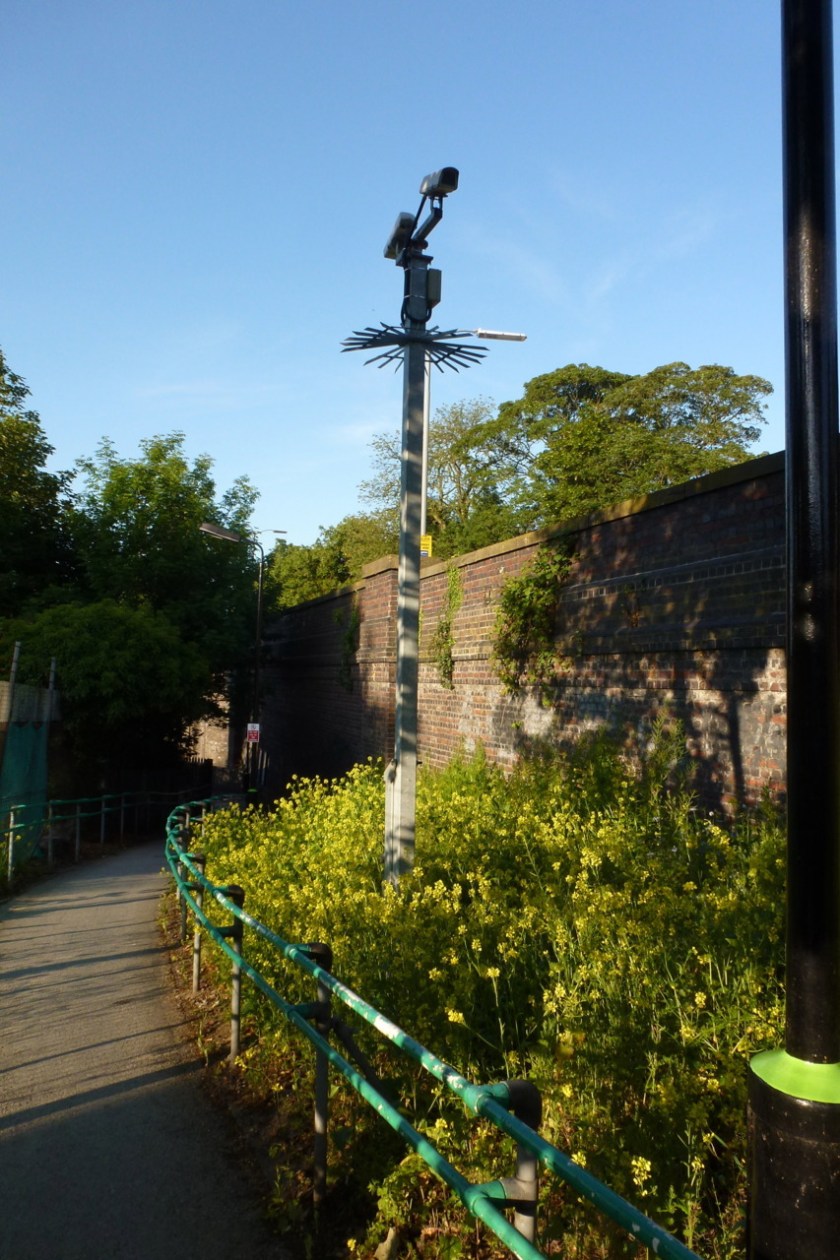
June 2nd – I noticed while wandering down to the train that this patch of forgotten weeds beside the access ramp at Four Oaks Station was, in fact, a thriving crop of oilseed rape. I can’t imagine anyone actually planting it, so I wonder how it got here – there aren’t any fields for some distance, and the seeds don’t blow on the wind. Was this an act of guerilla cultivation? 

Whatever, it’s a cheerful sight and smells lovely.

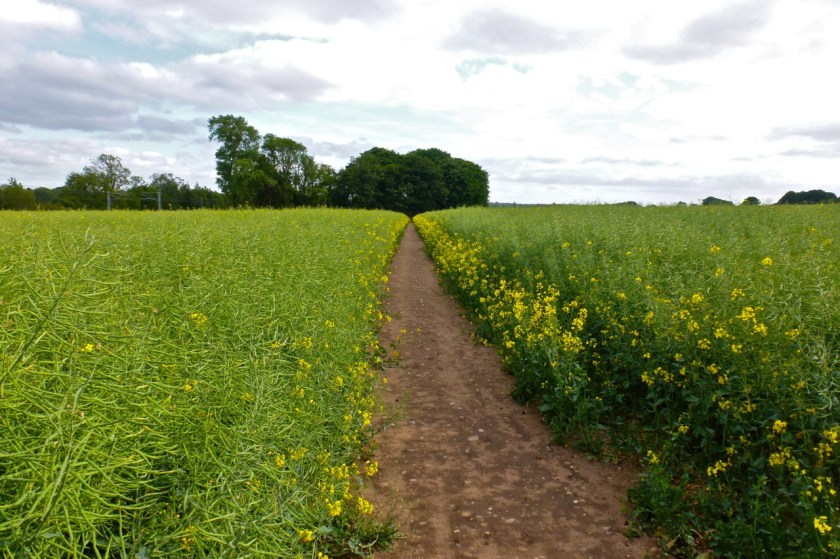
May 18th – After a rainy, hard, grim day, returning home from Shenstone Station into the wind was hard work. The weather had brightened, however, and the sun was coming out. On the way to Footherley, along Hollyhill Lane, this path through a ripening crop of oilseed rape caught my attention. Leading to Footherley itself, the path is well used by walkers and locals alike.