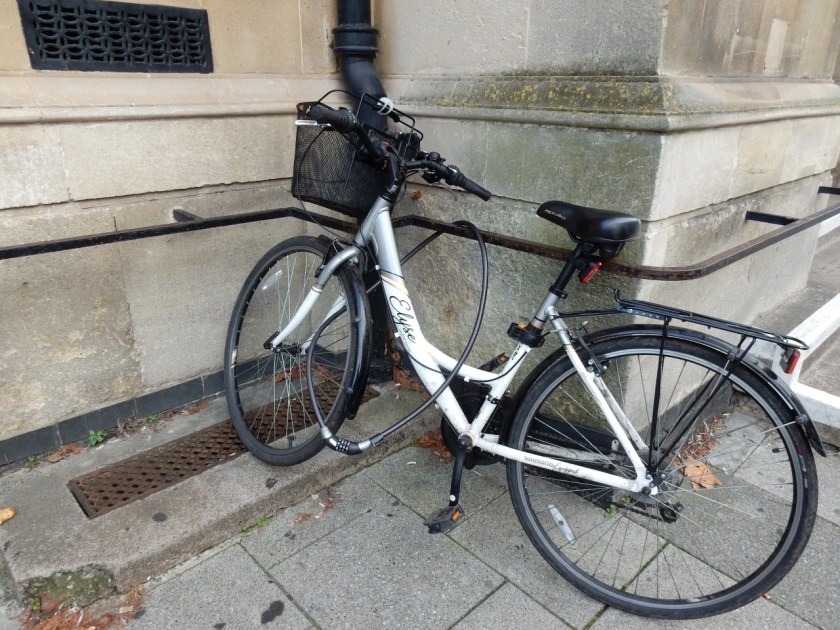
November 26th – It’s rather sad, but I bet the person who locked their bike up outside Cheltenham lLibrary thought it was much better secured than in reality it was.
When you lock a bike up, think like Houdini.
November 26th – It’s rather sad, but I bet the person who locked their bike up outside Cheltenham lLibrary thought it was much better secured than in reality it was.
When you lock a bike up, think like Houdini.

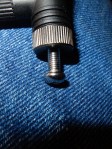

November 25th – A wee cycling tip for the road cyclists out there. I’ve recently had to replace my bike-mounted pump (I smashed the previous one when I came off on the ice a couple of weeks ago). One problem with frame mounted pumps is they accrue crud, so that when you come to use them, often they’re munged up.
One tip I pickled up off an old touring cyclist (if you use Presta or Woods valves) was the M5 screw in the pump head. Just take a 5mm metric screw, preferably stainless, and with the pump head relaxed open, it should be a comfortable push fit in the open port.
This stops water getting into the pump body and corroding it, and also stops mud getting in where it has to be removed and stands a change of buggering up the tyre valve. Easy to remove with a nail, blade or Allen key, this tip makes those uncomfortable roadside repairs a bit more bearable.
Cycling wisdom, right there.

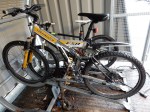

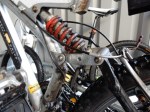

November 23rd – Spotted in a customer’s bike shed, this venerable, full suspension Specialized bike. In the day, I think this would have been a fairly expensive bike and it’s interesting to see the complexity of the rear linkages, which seem heavy and very intricate. Particularly noticeable is the pivot ahead of the dropouts, just on the chain stays.
Obviously well ridden as commuter, it looks like a hard bike to ride on road, particularly with those tyres – but I also note the old school leather shoe straps and general patina of road grime.
Other people’s bikes are endlessly fascinating.
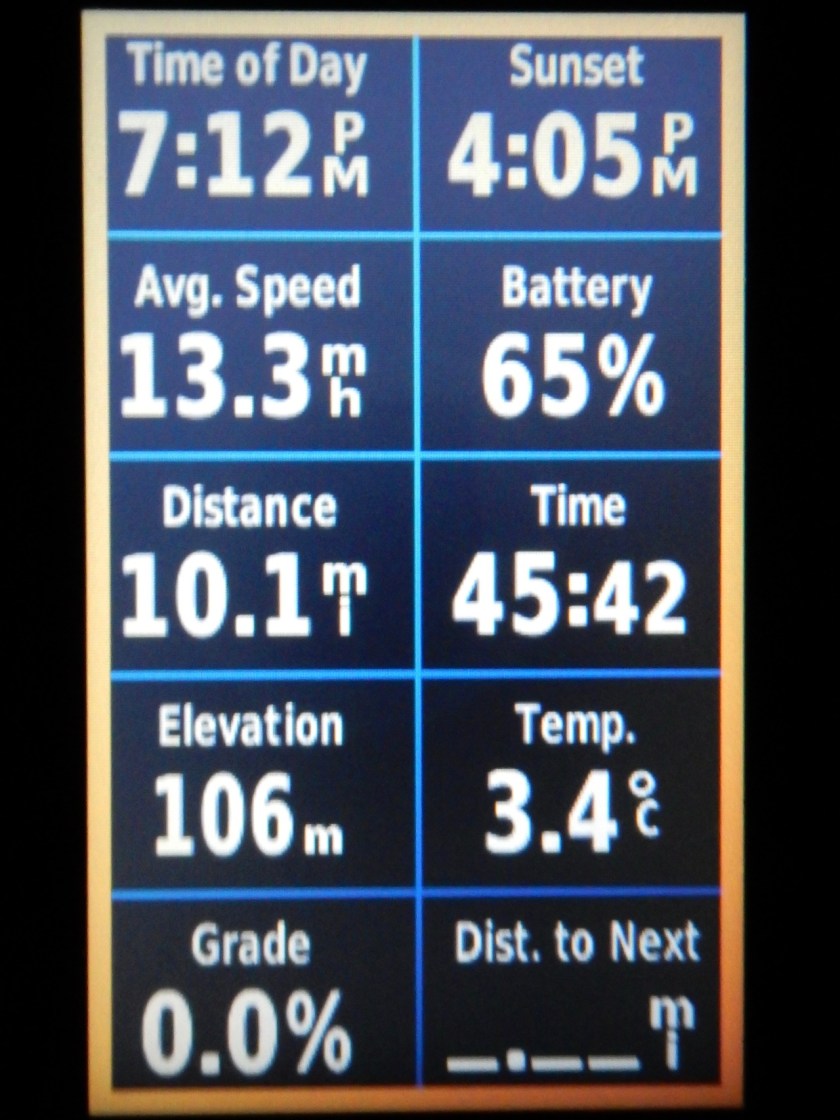
November 22nd – Despite a bit of a slow ride back up the Chester Road (though powering down into Brownhills from the crossroads is always a joy) a couple of things stood out as I glanced at the computer at the lights at Shire Oak. The first was it felt warmer than it had for a while, and secondly the sunset was now coming up to 4pm.
The temperature though, was not even 4 degrees celsius, which means I must be getting used to the cold again, something I’ve had trouble with this year. I also noted that the elevation was horribly inaccurate – at least 70m out. Normally fairly accurate, the elevation was automatically calibrated when I set out in the morning, and is based on air pressure, so it shows that during the day, atmospheric pressure rose.
Perhaps we’re in for better weather. I do hope so.
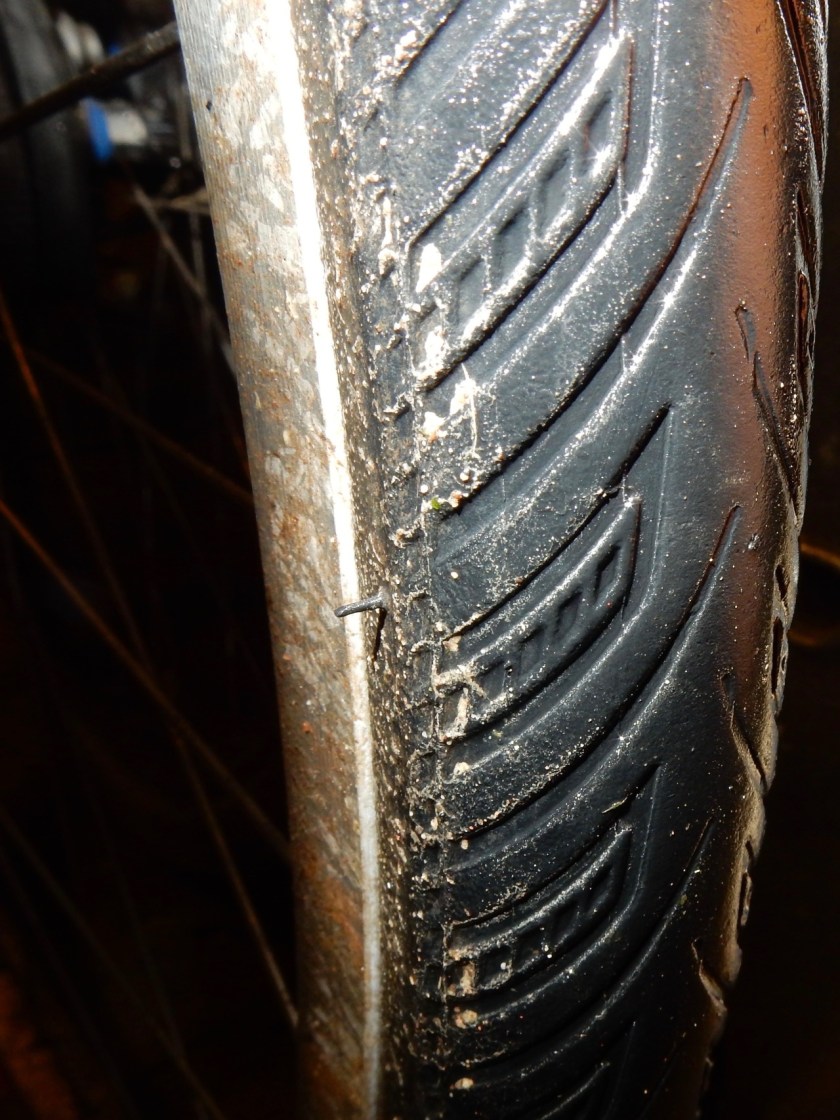
November 8th – For the past few months, I’ve been running different tyres to my preferred, trusty Schwalbe Marathon Plusses – I was wanting to go back to 28mm tyres, but the frame is just a tad too slim to use marathon plus 28s, so I bit the bullet and tried Specialised Armadillo 28s instead. I’d heard great things about them, but wasn’t expecting them to be as good.
They haven’t been bad, actually; maybe not as tough, but the tread is wearing better than I’d have expected, and they’re only a little less grippy than my favoured brand.
Despite being classed as ‘all condition’, I’m not sure they’ll be suitable on ice, but we’ll see. So far, so good. Genuinely shocked.

November 7th – I’m still not happy with the low light performance of the TZ-80. In lichfield I’d been using the Nikon, which seems to love the night, but this particular incarnation of the Panasonic compact seems very middling.
When you can get it right, as above, it’s not too bad, but the reflection of the street light is better than the light itself.
On the TZ70 if I munged with the aperture, I could get the hard sharpness I liked, but not on this one.
Something is obstructing me, but what? This was the best of 20 odd shots, most unusable mush. I suppose if it comes down to it, I could always read the manual…
I’ll crack it.



November 5th – It was bitterly cold as I headed out just after nightfall on a run up to Chasewater and back to the supermarket to get some shopping.
I’m fiddling with the camera settings, and it’s getting better, but I still can’t find that magic spot I had with the TZ70. Perhaps I never will with this one, it’s an odd box.
I was lucky to catch the firework at Chasewater on a long exposure. I was less lucky at Catshill Junction where I tried repeated shots to just miss the action every time. Still, the view wasn’t bad.
Practice makes perfect, I guess.
September 20th – Spotted in a customer’s cycle shed, two bikes side by side that illustrate something that annoys me.
Shimano, the Japanese industrial giant that revolutionised cycling are not what many people imagine them to be. They are essentially production engineering experts, probably more than they are bicycle technology or fishing equipment manufacturers.
Shimano make loads and loads of great, well thought out products that I love. their work to refine the derailleur gear system in the 80s and 90s, their clipless pedal systems and electronic gear technology have changed cycling for the better immensely. But something more than these innovations has had a massive influence.
Shimano sell innovative kit to bike manufacturers. That means they also sell and produce the tooling to manufacture bikes en masse. Shimano often market products to manufacturers because they’re cheaper or easier to assemble on a production line, but sometimes of little discernible end-user benefit.
Shimano pioneered the external bottom bracket, a frankly piss-poor idea that is hated by lots of cyclists for it’s increased wear and susceptibility to corrosion. Shimano invented it to make assembly of bikes from one side far easier. It shifted to producers in large numbers and is now, sadly, ubiquitous.
Similarly, for years, bicycle disk brakes – which I love as a technology – had their rotors attached to the wheel hubs by six M5 screws, like the bike in the top picture. This ‘6 bolt’ design has been a standard for more than a decade, and works well. You can feel if there’s a securing issue without the loose disc being dangerous, and the rotors are light and easy to replace with standard workshop tools – usually an Allen or Torx driver.
Shimano recognised that a big cost in disc brake adoption to mainstream bikes was assembly of the disc onto the wheel – six screws require either a complex, mutispindle head or an operator repeating the same action 12 times per product. So they invented Centerlock(sic).
The lower picture shows a bike with a Centerlock rotor.
Centerlock uses a splined male dog on the hub, and a special brake disc with a mating female recess. The rotor slides onto the splines, and is held in place by the same type, thread and tooled ring that holds the gear cassette on a rear wheel, thus requiring one tool to fit the cassette and two brake rotors, a huge cost saving in production.
Centerlock rotors are heavier, and you need a special tool to fit or remove them. If the ring comes loose, there’s nothing else to hold it.They limit consumer choice of aftermarket replacements.
There’s a whole industry sprung up around centre lock to 6 bolt adaptors.
This change in technology was introduced purely for the benefit of bike manufactures, arguably to the detriment of consumers and to me, is inferior.
Rant over.


August 3rd – The delights of a client’s bike shed again: this clearly quite expensive Giant mountain bike confounded me. I’m sure it’s a great ride, but the number and quality of joints in the aluminium frame are astounding. Look at the fabrication in the seat tube to accommodate the unusual rear suspension arrangement. And the joints and design on the upper seat stays where they meet the pivot seem bizarre. And the tyre clearance on that crossmember is minimal.
I don’t know how designs like this come about. Aesthetically, to me, it’s hideous, and I can’t see any engineering or user advantages.
Is this complication for the sake of it?

August 1st – A mechanical mystery. Three month old Shimano hydraulic brake pads, which suddenly lost grip and appeared to be glazed or contaminated. The pads are the sintered metal type and are genuine manufacturer parts.
Sometimes, long periods of braking can ‘glaze’ pads. causing them to become highly polished and shiny, meaning they don’t work well. The common treatment for this is to file the surface of the pad and pop them back in.
These I have degreased, cleaned, filed and even surface ground, but whatever I do they quickly glaze again. New pads of the same type were just fine.
Anyone got any idea what’s going on here? I’m wondering if overheating has caused the pad material to harden…
 BrownhillsBob's #365daysofbiking