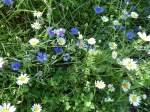
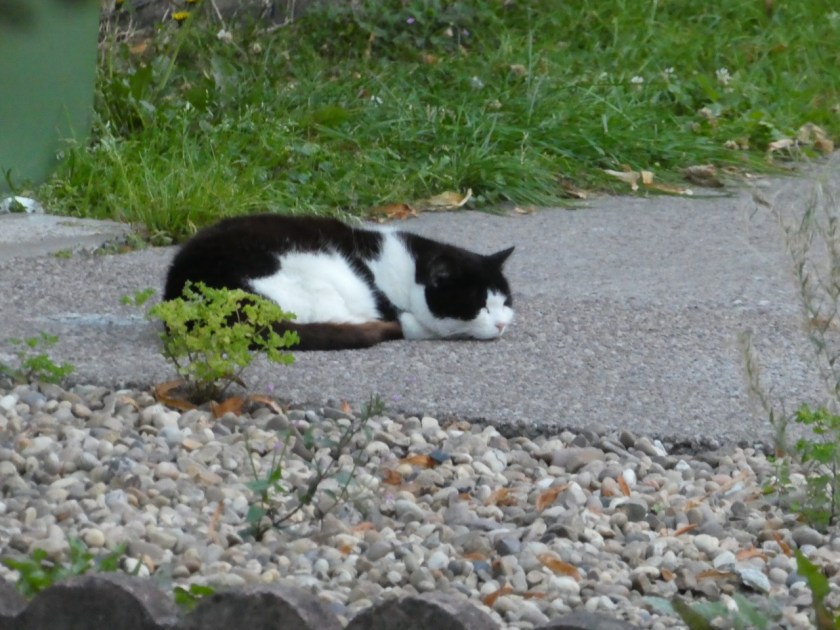
August 17th – Too many cats I hear you cry – sorry, but I adore them. And with the warm weather, they are everywhere; dozing, loafing, strolling, patrolling, stalking or just watching.

When the warm spell is over, they’ll be mostly gone.

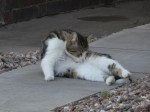
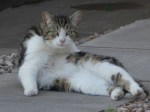
Returning home from work this evening, I passed this relaxed guy in Pleck. He was in the same place this time yesterday.

It’s clearly a hard life, but he’s bearing up, best he can.

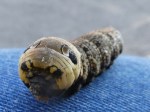
August 15th – A real treat for the seventh day of seven days of wildlife, the challenge set me by reader Susan Forster. I was riding through Pleck, and I spotted something wriggling, right in the middle of the road; stopping to investigate, I found this elephant hawkmoth caterpillar.

About two inches in length and ½ inch diameter, this is a big creepy crawly, not for the faint heated, but harmless and rather fascinating. Camouflaged to look like a plant stalk or twig, it has fake eyes and a bulbous head to make it look far more threatening than it really is, should it be threatened. Living mainly on willowherb or fuchsias, I suspect this one had been dropped by a bird, and thus escaped being lunch, and after posing for photos, was popped back on the scrub I think it came from, thus avoiding being squished.

This is a truly huge, fascinating caterpillar, and although common, a great chance find. Read more about it here.

August 10th – So, continuing Susan Forster’s seven day wildlife challenge, no such series would be complete without the swans. Truculent, grumpy, aggressive and temperamental, we all love these large waterfowl. 

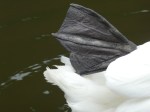
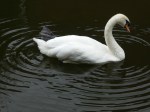
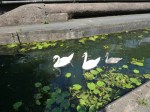
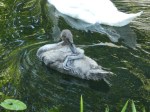
I spotted the Bentley Bridge family – still doing well with their single cygnet – at the disused basin in Pleck on my way to work. Just one at first, drifting in classic leg-up rest position, preening with intense concentration. 

Swan feet are fascinating – so leathery and hard-wearing. A triumph of natural engineering.

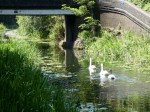
The other two members of the family were nearby. I notice junior is now, like the Watermead cygnets in Brownhills, developing white back feathers now, and all trace of juvenile grey fluff has gone.

Oh, how these birds enthral me.

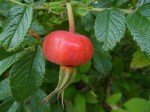
August 4th – Bitterweet to see the rosehips now ripening well along the lanes and towpaths of the Black Country. They are beautiful in their shiny, vivid orange jackets, their sight brightens many a ride in late summer and autumn. But they also indicate the passage of time and season, and their appearance always makes me a little sad for a summer passing.

There’s plenty of time, though for summer to improve, and while there are still blooms alongside the hips, all is not lost yet.

July 21st – It’s true that I am one of those characters that amasses a huge amount of trivia and mental flotsam as I go about daily life, and this is one of those things, but in my defence, I was actually asked about this a month or so ago so here you go…

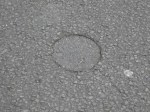
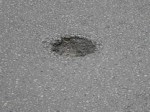
People who study the road surface (and there are a few of us, mainly on 2 wheels) may notice perfectly circular cutouts, punch-throughs or holes in the endless asphalt. Sometimes they’re filled with tar, or white lining paint. Often, they have the material that came out of them put back in like a tarmac divot. Sometimes, they open into potholes, particularly if badly sealed. But what are they?

These odd features are the signature of the road surveyor, and a road near the end of it’s life. When a road is resurfaced, the tarmac is literally planed off by a large cutting machine. The planings are then taken away, recycled back into asphalt, and relaid. How deep that planing operation goes is critical, as is knowing the depth of the road surface, and what it’s like beneath the blacktop ‘crust’.

When a road is considered for resurfacing, a surveyor will take cores with a drill and round cutter at about 100-125mm diameter, and extract them like a cheese taster sampling a cheddar. They are photographed, measured and replaced (or filled). From this a plan of work can be formulated.

Sometimes cores are taken in pairs, close together; others they are equally spaced along the length or a road, on either side. These, spotted around Walsal today, are in various states of becoming potholes themselves and adding to the problem they were created in the process of alleviating.

I’m convinced that every time I learn rubbish like this, it pushes something useful out of the back of my brain.
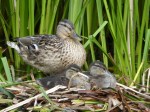
July 19th – Oh, hi pals. Where have you been? Not seen you for a while.

Near Bentley Bridge, just near the nest where they hatched their single cygnet, the swan family were moving purposefully towards Darlastoin.

Their single offspring – very attentively looked after – is growing large, and doing well by the looks of things. 

They stopped briefly to see if I had food, then scooted on, little one in the classic ‘resting foot’ position, leathery limb tucked high on the back for rest.

A lovely sight.

July 19th – I’ve been largely ambivalent about the odd project to resurface the canal towpath between Walsall Town Wharf and the Bentley Mill Way aqueduct. It’s a decent enough job, I guess, but I don’t feel the surface is that much of an improvement, and the loose gravel and untreated under bridges are problematic. But there is something that’s beautiful.

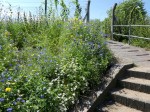
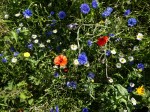
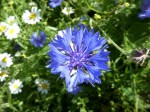
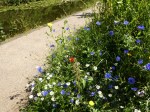
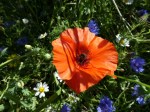
When the contractors remade the retaining walls to the steps at the Scarborough Road Bridge in Pleck, they planted wildflower seeds down the embankment, and at other spaces on the towpath.

This has resulted in stunning little urban patches of sunshine like this, so wonderful on what was the hottest commute of the year so far.

Thank you to whoever, for the act of beauty and foresight.

July 15th – As a good pal said to me a few days ago, some plants would be really cherished if they were harder to grow, and I believe this to be the case with ragwort. Deep yellow and orange, this dweller of scrubs, verges, hedgerows and fallow ground flowers profusely throughout the summer, largely ignored because it’s so common.
Scourge of horse-owners due to the toxic effect on their steeds, it’s not a well liked plant.
Which is a shame, because when you stop to look at it, it’s rather beautiful.