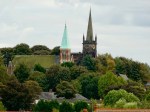
February 16th – On a misty, hazy mild and sunny lunchtime I crossed Kings Hill Park on a quick run out and stopped to gaze at Church Hill and the twin sisters of Wednesbury.

The view changes subtly though the years – new buildings replace old ones, trees grow and are felled, factories and buildings like the old Carcraft site fall in and out of use.

But overseeing all, those twin, beautiful spires, watching their industrial, urban flocks for over a century each.

This is a view that never ages.

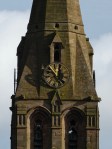
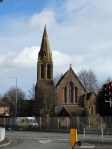
February 17th – I noticed something today I’ve passed many times but never stopped to look at – Wood Green Church. Stranded by the road system of Junction 8 of the M6, it remains gracefully marooned in the old village of Wood Green between Pleck, Wednesbury and Bescot. 

I have never noticed the elegance of the sharp roof, the beautifully red stone from which it’s built and remarkably detailed spire – and those clock faces are just wonderful.

I need to go and have a closer look – I can’t believe how long it’s taken me to notice this gorgeous building – I’ve been passing it for decades now.

The Black Country gives up it’s surprises slowly, and that’s why I love it so.

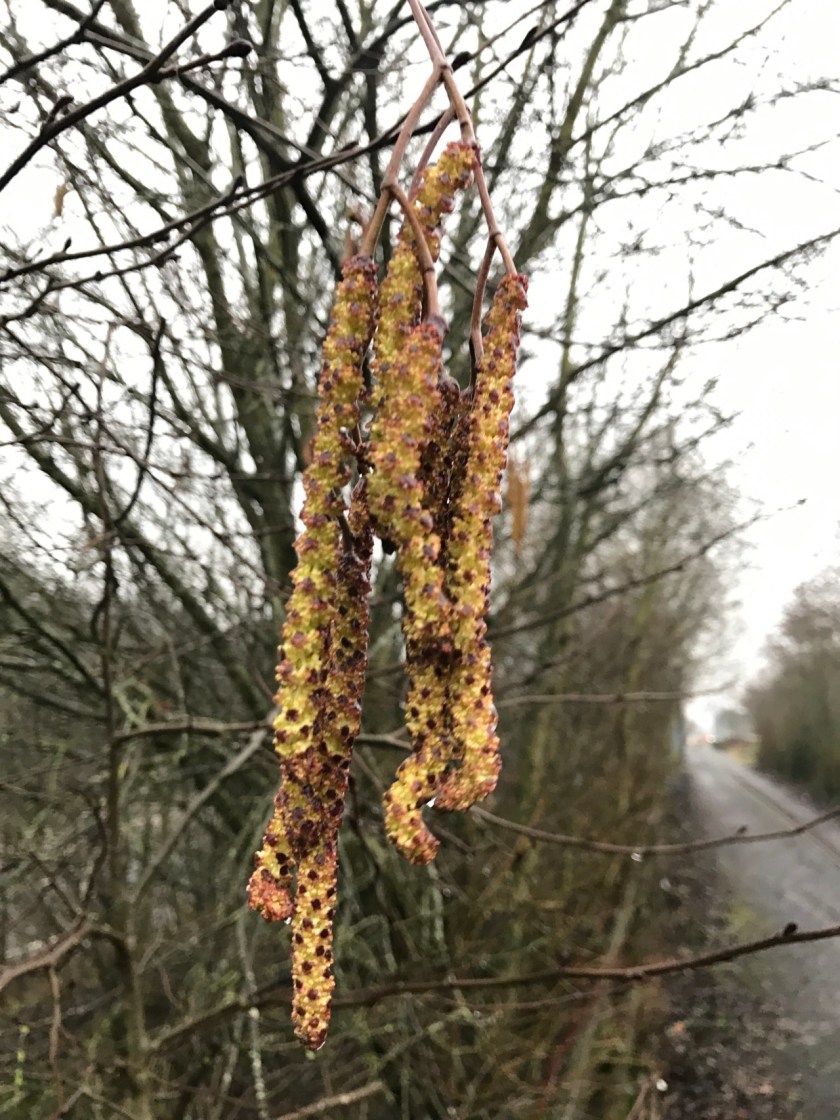
January 31st – While I’ve yet to break my snowdrop duck for the spring (and BrownhillsCommoner sent me a lovely picture of the ones in his garden) there are some spring flowers around, although maybe not conventional blooms.

These catkins are showing well at the moment in Wednesbury, and are a common feature of hedgerows, scrubs and waysides. They are the male flowers of the alder tree, and also occur on the close relative, Birch.

Wind pollinated, these blossoms don’t have normal petals or a flower like structure, but are a lovely, bright feature of late winter and a signpost into spring.

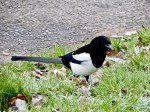
January 27th – On a mid-morning errand I spotted this magpie on the cycleway around Wednesbury Parkway. Oddly confident, it hopped and pecked in the frozen grass just a few feet away from me and the bike, his antics charming and fascinating, like any corvid.

Magpies seem to get a bad press, but I quite like them. They’re intelligent, resourceful birds that are actually surprisingly colourful when you catch them in the right light.

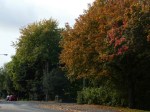
November 4th – And then, in the afternoon, again crossing Kings Hill Park on a short errand to B&Q, the twin sisters caught in the soft sunlight of an autumn day, surrounded by turning leaves.

This scene has occurred every year for over a century, and makes me feel safe in it’s constancy.

November 1st – My gosh, November already? Where has the year gone?

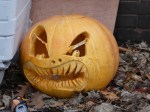
Continuing a recurring yearly theme of discarded pumpkins I noted this sad, post-Halloween sight as I passed through King’s Hill mid day: a beautifully carved, huge pumpkin left out for rubbish by the Black Horse pub.

Someone worked hard on that, it’s very well done. Big pumpkin, too.

Bet that made a lot of soup…

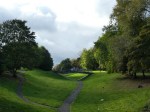
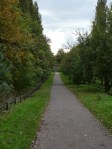
October 19th – Darlaston is at it’s best in autumn, and with the leaves turning, this is a great time to visit this humming little town and take in it’s unexpectedly great architecture and scenery.

Some of the best of Darlaston can be seen in it’s two parks – Victoria and King’s Hill, from which the glorious twin sisters of Wednesbury can be appreciated in all their glory.

It would be hard not to love this place.

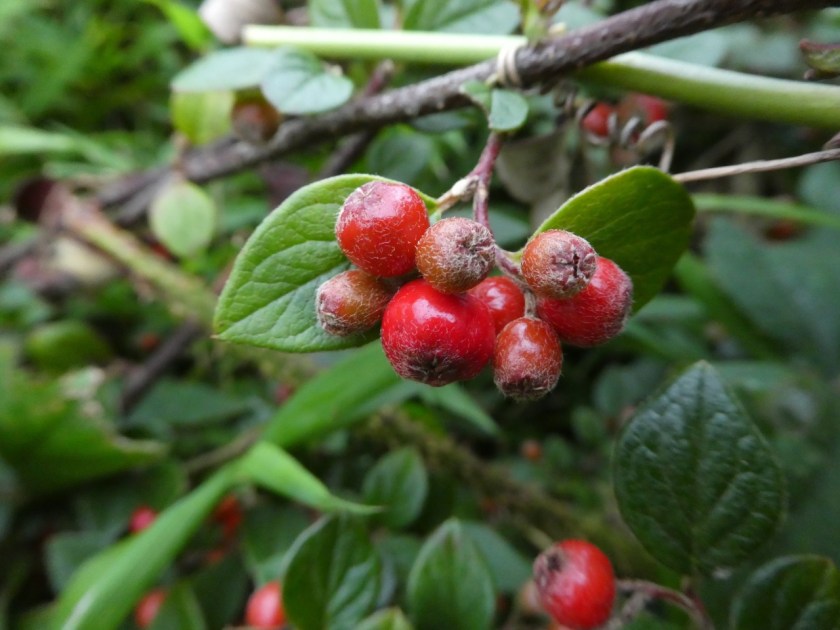
September 19th – Yet another abundance this year of bright orange-red cotoneasters, so beloved of blackbirds, who upon finding a bush, will fight off challengers, usually while another steals the sugary berries.

These bright fruits – another clear sign of autumn – line hedgerows, cycleways and towpaths, and seem a very popular bush to plant on industrial estate verges, which is good for birds and bees alike.