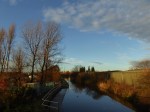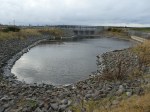
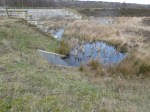
February 26th – The water level at Chasewater is lower than I’ve seen it for a while. Interestingly, rather than open the valves fully, there’s a good flow into the canal, and the balancing culvert between the Nine-Foot pool and Spillway has been opened, allowing a steady stream of water to flow into the Crane Brook via the drain system under the canal.

I understand why the level is being dropped – with the dam being permeable, if installing drains you want the installation to be as dry as possible – but I’m puzzled by the method. It has, however, been convention since the original dam works to allow the reservoir to overflow every spring, so perhaps this is to irrigate the spillway marsh as it would be normally.

Interesting too to see the white scale around the lowered waterline. It that salt, or something else?
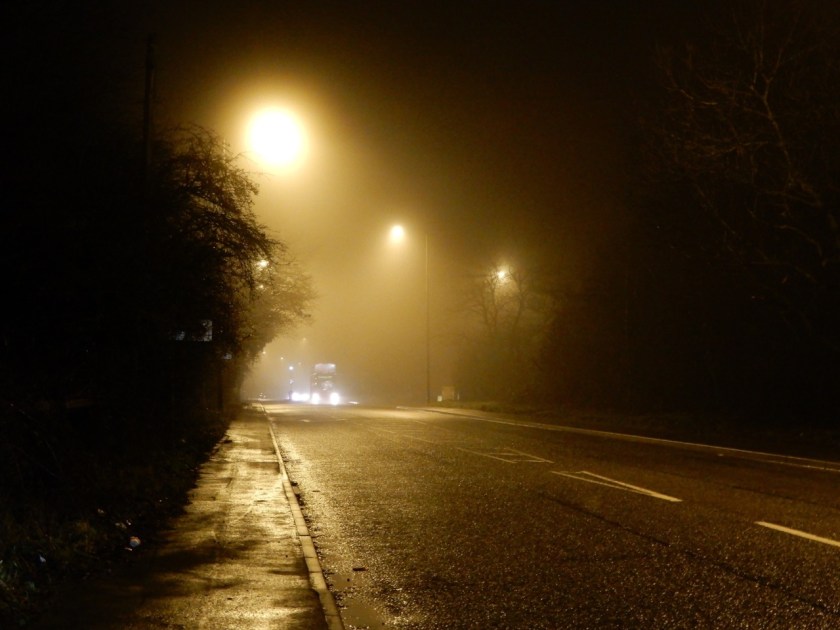
January 16th – As I neared the crest of Shire Oak hill, it was murky and drizzly and the kind of night you really don’t want to be out in.

There wasn’t much traffic, either, which seemed strange – but I did note the model ‘works buses’ – not these days going to Crabtree or the BRD, but shuttling workers back and forth between the Birmingham and Black Country conurbation and Amazon at Rugeley.

These services run seemingly throughout the day and night and I’d love to know more about them.

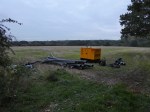
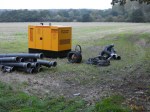
October 24th – Passing Jockey Meadows on the way home, the clean up from the recent sewer problems near Bullings Heath is still ongoing, with tankers pumping our sumps and groundwater in series during the day. I noted as I passed a diesel standby pump dropped in a field, and pipeline equipment. It’s either for flushing, or pumping water out of the brook into the sewers for a while.

The work here has been protracted and involved, and the efforts taken to avoid damaging the local ecology with raw sewage have been dedicated and impressive.

Let’s hope all the issues are resolved shortly.

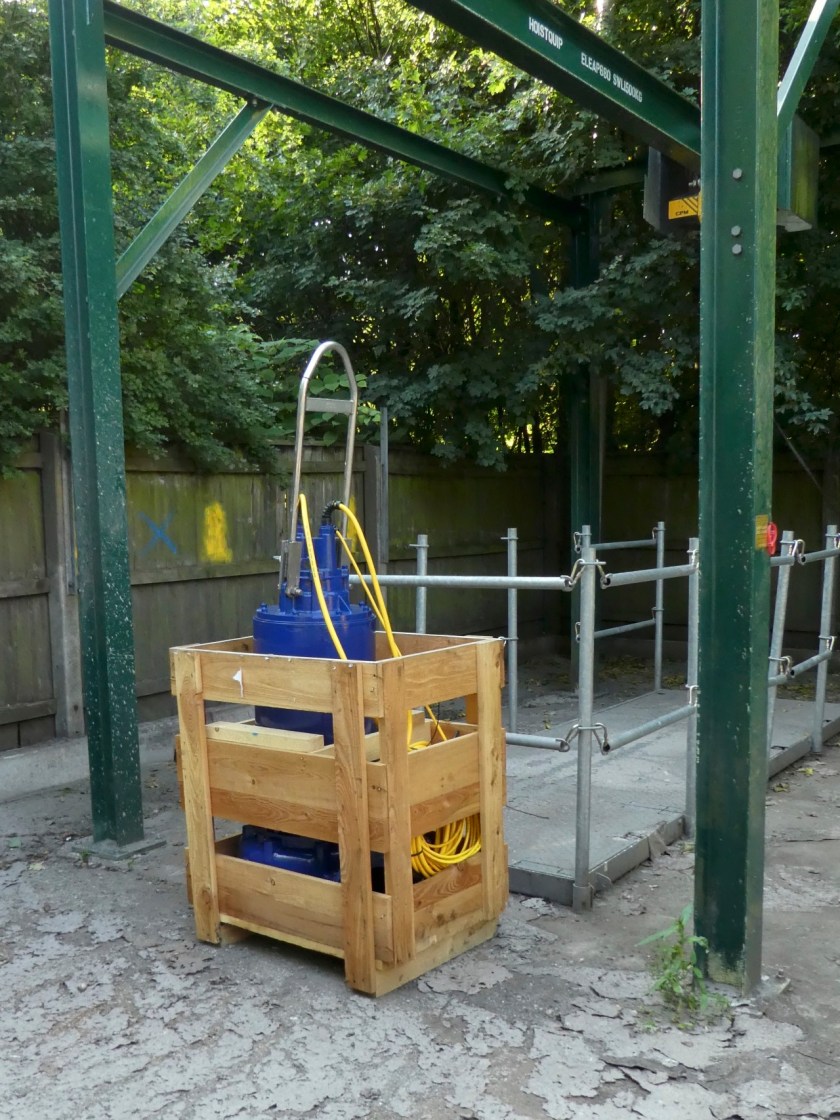
July 20th – I’m fascinated at the moment by continuing work going on at the sewage pumping station at Green Lane in Walsall Wood. Ever since last Easter, there has been work being carried out here sporadically; from tankers pumping manholes out to new pumps going in and old ones being removed.

I know there’s quite a bit of plant below ground here, presumably to pump the sewage up the hill to the sewage works, not 400 yards away towards Clayhanger. 

I noted this evening yet another pump awaiting installation in the little roadside compound. I have no idea what the problem is, but it’s fascinating watching the comings and goings to fix it.

So many ‘invisible’ services support modern life, it can be a surprise to see how intensively they’re maintained.

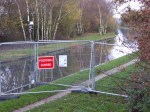
June 29th – On the canal near the Black Cock Bridge at Walsall Wood, work appears to have been undertaken today. 

I have no idea what. It was clearly over when I came through, which makes the graffiti-style approach to warning about it wrong; how do you know the warning is current? At least you can remove signs when the job is done.

The spelling was very non-conformist, so I decided to preserve it for posterity.

March 1st – Another grey day, but it felt warmer. At dinner time, I had to venture back into Walsall from Darlaston and took the canal, which was a mistake: the works to relay the towpath have made sections not impassible but hard going.

Passing over the Bentley Mill Way Aqueduct, I looked down at the works below. Running three months late, the road has been closed and totally relaid – but the main bottleneck that is the narrowness of  the bridge I’m standing on – has not been touched. I’m at a loss here to understand how anything other than the footpath and possibly drainage has been improved.

Sometimes it’s hard to see the benefit in road schemes until they operate in practice. I hope that’s the case here.

November 22nd –  I had to nip to Aldridge in the afternoon, and on autopilot, rode up the canal, to find it still blocked off for works between Northywood Bridge at the back of Brickyard Road and the Wharf Bridge in Aldridge, between Stubbers Green and the town centre.

I had, of course, had warning of this previously from TheMadOldBaggage and Stymaster, and forgot; still, the diversion wasn’t too bad.

The closure looks set to continue for a while as they rebuild embankments. Look out for it if you’re up that way. If you remember…

July 18th – Again, I made my escape, and I slipped into Birmingham mid-afternoon and got the train to Kings Norton, intending to ride into Birmingham University where I had a call to make, and then on to the city centre along the canal, which is great from King’s Norton all the way into the city.

It is when it’s open, that is…

It turns out the towpath is shut until September between Bourneville and University, for resurfacing. I slipped through the barriers easily at Bourneville, and rode a peaceful and generally rideable route all the way to the barriers at the other end, which were impossible to transgress, so I doubled back and found a way over wasteland down to the Aston Webb Road. 

Hot and bothered, I made the visit I intended to, and rode into Brum on the canal, which was lovely.

It was again a great afternoon – but very, very hot indeed.

Just one thing spoiled it – I have a foot injury, or so it would seem. I don’t know what I’ve done, but my foot is agony to walk on; not bad to cycle on, but it makes it more difficult. This is unusual for me, and I hope it heals soon.

Rather than ride home from Birmingham, I caught the train. 

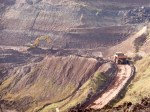
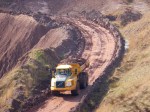
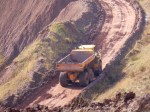
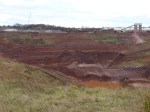
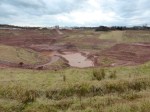
February 28th – On Monday, I took some photos of the Weinerberger brickworks marlpit near Stubbers Green. At the time, extraction wasn’t in progress, but as I passed this afternoon, far below me in the quarry, the red marl was being loaded into a continuous chain of trucks to be hauled to surface factory for moulding into bricks. Digging will continue for hours in a precise, designed pattern. The marl is surprisingly dry, and there is still lots here. This extraction will continue for some time to come yet.

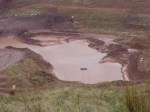
February 24th – The huge marlpit at Stubbers Green that feeds the Weinerberger brick plant with raw clay is impressive. These extraction processes are not as simple as just digging a hole. The pit is dug in a pattern decided by engineers to ensure safety and drainage. In an impervious material like marl, accumulated water from the elements and surrounding environment is an issue to contend with. Here, a floating pump on a bouyancy raft made of empty drums returns water to a surface lagoon. Roadways and access tracks crisscross the site.

Extraction didn’t seem to be in progress when I passed today, but excavators load huge trucks with the red, surprisingly dry material, which is conveyed to the plant on the far side in an endless chain. The factory was running, however, as I could smell the distinctive note of baking clay in the air.

Although ugly, and many consider it a blight, this is a factory and facility that provides much employment to the local area, and the bricks produced are good quality. I find it fascinating in scale and procedure, and could look into that void for hours.

One of the fascinating aspects is looking at the rear face, and seeing the subtle colour changes in the clay as the geology yielded its secrets.