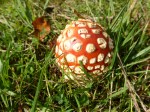
October 27th – The fungus, on the whole, is great this year, but the fly agaric remain elusive. My usual best spots for finding this most fairytale of toadstools – up on the canal behind the Terrace at Newtown, on the common opposite Birch Coppice and at Chasewater just by the bypass have all shown poor examples this season. These few decent ones were spotted on the canal bank at Anglesey Basin.

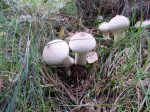
The puffballs – a fine crop – were all growing near Fly Pool on the North Heath at Chasewater. In a few weeks that green gunk inside will be dry, powdery spores, and the fungus will pop open on contact and scatter them on the wind.

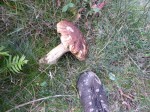
The mystery large toadstool was on the canal embankment near Lichfield Road. I have no idea what it was, but it was very large and alive with bugs. 
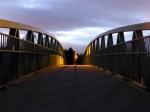
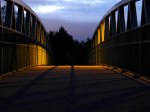
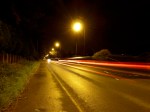
October 26th – And then, there’s the darkness itself, and the magical effect it has on otherwise ordinary, everyday places. A by-pass, a windswept pedestrian bridge, a well-positioned streetlight, a lone stranger. 

Even Chasetown can be dramatic at times. Hello darkness, my old friend.

October 25th – Although it was lightly raining, it was warm, and with the wind behind me I took the back way back to Brownhills, down the Lichfield Road and up over Springhill at Barracks Lane. 

I had a play with long exposure shots at Sandhills, and was quite pleased with the result, but puzzled too, when I looked at the images on the computer. In both, a wavy, oscillating thin trace of light is present above the main vehicle trails, which are very straight. I thought about these thin, curling traces for almost an hour, then I worked them out. 

They’re the light trail created by the reflection of street lights off the car windscreen, hence the curve and double back as the car enters the dominance of another lighting column. It’s quite mathematical, and I think it could be modelled with fairly basic locus mathematics.

I could be wrong, though…

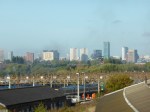
October 24th – In Tyseley, I left the station in the mid-morning, with a bright autumn sun cheering me up and making me feel positive rolling the past few days of rain, mud and wind. I stopped on the bridge in Wharfdale Road to look back up the line towards the city. I’ll nvere tire of that view over the rooftops of Small Heath and Bordesley. 

The pall of smoke was from a steam locomotive under test at the rRailway Museum. I couldn’t see it from where I was, but I could hear it and it’s lovely steam whistle.

October 23rd – Strategic mistake. I left Leicester early, and hopped on the first train out of Birmingham I could. I ended up cycling from Shenstone against a fearsome, grinding headwind. Although the lanes are taking on the beauty of autumn at last, this was a hard ride and I didn’t really appreciate the dry, sunny ride at the time.

So far, this has been a week of very grim commuting.

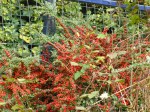
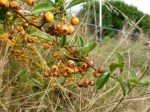
October 23rd – Back in Leicester for the day, and passing through South Wigston station, I stopped briefly to study my favourite bit of wild land, not expecting much to be showing well. How wrong I was. Cotoneaster, a yellow berry I don’t recognise, roses, rose hips, clover all made for a fine splash of colour. The cotoneasters were particularly impressive, and they’ll make a handsome winter feast for the blackbirds.

A fine end to yet another wet commute.

October 22nd – I noted on my way to work the other day that ownership of the former Shire Oak Quarry – now a landfill for dry construction waste – has passed from Tarmac to JPE. I’m not sure why Tarmac sold it, but it was mothballed for a while after the slump in construction after 2008, to be reopened a couple of years later. 

I also noted that dust monitoring equipment has been installed, too. Wonder if that’s in response to local issues or a general requirement these days?

October 21st – Time for a techy bit. Disc brakes are my favourite kind of bicycle brake – resilient, reliable and good in the wet, they need care if they’re to maintain performance. The brakes on the current commuting bike are hydraulic, and very powerful; they eat brake pads, especially in wet weather. In the wet, the grit from roadwash and grindings from the pads and disc combine to make an abrasive paste that makes the brakes noisy in use and causes wear to all braking surfaces. After a wet ride, wherever possible, I flush the discs in clean water to clear any residue off. If this is ignored, larger particles become embedded in the pads and score the disc surface, impeding performance and causing high-pitched noise.

I’ve also noticed with these appreciable wear on the discs. These were changed 3,000 miles ago and I can feel now feel quite a step between the surface and unworn part of the disc.

If your bike has disc brakes, look after them, and they’ll be there when you need them. It’s especially important in weather like this.