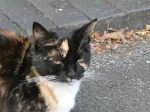
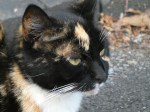
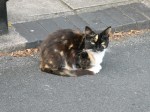
August 18th – The tidy little calico cat who sleeps with her tongue out was hanging around in The Butts, Walsall on my way to work: she was watching the world pass by from the pavement, tucked in nice and tidy.

I stopped to say hello, and she didn’t move, but didn’t invite fuss, either; we had a brief chat but she wasn’t interested in my company, clearly.

A lovely little puss someone loves very much.

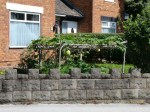
August 17th – I’m not going to say where this is for obvious reasons.

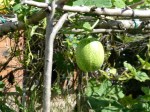
But in the heart of the urban Black Country, a keen gardener is growing melons in their front garden, on a frame made entirely of cut branches.

This is a remarkable and beautiful thing. My compliments to the grower.

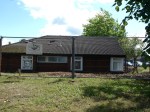
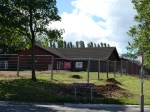
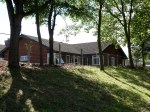
August 17th – A sad, regrettable tragedy unfolds in Rushall at the moment as the former Rushall Mews care home, an 80s-built single level facility that once housed many vulnerable old folk will soon be no more.

After four or more years of lying unused, the demolition crews have moved in.

There was nothing wrong with this place; the features were modern and it was well staffed by caring people and loved by the community. Closed by a council desperate to save money like so many others, we are now left with a care crisis, but the land will soon be new homes, probably beyond the reach of first time buyers.

Like other lost care homes – Narrow Lane, St, James, Greenwood House, Scotch Orchard – the gradual erosion of our social state makes me very sad indeed.

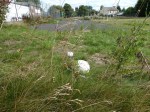
August 16th – Another delight of the season, that frustratingly I couldn’t harvest: Giant puffballs on the patch of fenced off grass used as an occasional football pitch right in central Walsall between Smiths Flour Mill and the turn off the ring road for Birchills.

These are about the size of a football, and are pure white and lovely to eat. There were about 14 in total over the field, but due to the gates being locked, they were beyond the range of my frying pan. 

Nice to see these huge fungi though, looking for all the world like alien eggs.

August 16th – Riding to work down Green Lane, Shelfield on a bright sunny morning, and something gently reminded me of my grandfather.

The harvest at Grange Farm has been ongoing, and the road had been treated to a generous sprinkling of spilled cereal kernels – probably wheat. This grain, spilled by machinery and trailers as they lurch from field to barn is a feature of rural and peri-rural areas at this time of year, and is what the old man called ‘gleanings’.

Locally, ordinary folk were allowed to collect the seed lost on the roads and lanes for their own use. Few would use it for food, but many fed it to pets and livestock. Grandad said that you traditionally fed pets you kept for pleasure, not profit on the gleanings, fancy birds like guineafowl. 

Guineafowl were locally called Gleanies from this practice.

I well remember the farm opposite where the old man lived until a ripe old age having guineafowl, which are noisy, shrieking birds. ‘Gleanies am off again, the buggers!’ he’d curse every morning.

On a side note, watch out for the gleanings as they’re slippery and soapy, and steal wheels and grip, particularly when wet.

A warm memory on a warm, late summer morning.
August 15th – I spun up The Parade and over to Burntwood on the errand, then returned via Chasewater and the canal. It was a good sunset – there wasn’t enough cloud to be terribly dramatic – and the place was alive with bugs of every description, but the atmosphere and light was wonderful.

One nice thing about this time of year is the sunsets should improve, and I’ll be in with a better chance of catching them.

August 15th – I had to nip out on an errand at sunset. The day had been fraught with a busy morning and a visit to the dentist in the afternoon, which always terrifies me, so it was good to get out and get my calm back.

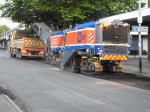
Passing down a blocked off High Street, I realised they were finally resurfacing the road; none of the poncey micro asphalt or surface dressing here; they were planing a huge amount off ready to lay a new layer of blacktop.

About time too.

Fascinated, I watched the operation for a short time; wagons, tankers, diggers and engineers came and went with almost military prescision, right there under Morris’s nose. He had his back to them due to the noise, but I could tell he was enjoying the spectacle, if not the peace.

An interesting and welcome thing.

August 14th – Sorry, after this I promise no morale oak wasp galls!

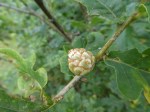
This is an artichoke oak wasp gall, created the same way as all the others, this wasp selects acorn buds, which are corrupted into these neat little artichoke shaped growths to house it’s larvae.

These examples spotted on Clayhanger Common.

That’s it now, I think we’ve collected the set…

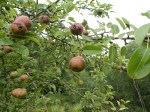
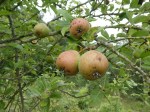
August 14th – Another tree I keep an eye on is the odd pear tree growing near the top of the bank between the canal and new pond at Clayhanger. I have no idea how it came to b there and suspect it sprouted from a discarded fruit core.

This small but dense tree usually fruits copiously, but this year is suffering terribly from blight and bird attack. The fruit on this tree have never looked appetising at all, to be honest.

An interesting thing though, and I’ll keep watching as it grows and develops over the years and hope that one day the harvest prospers. 

August 13th – More oak wasp galls, which I’ve gone all out to find this year for no other reason than they fascinate me.

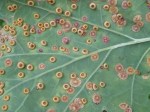
On a small sapling by the canalside track at Hopwas, hundreds of thousands of almost annular, ring-like growths on the leaves, looking maybe like fungus or some odd egg. These are the delightfully named common spangle gall for the flat ones, and silk button galls for the rounder, more sharply defined ones.

These are all created by the same mechanism – a small wasp injects an egg into the leaf, and a chemical coating the egg disrupts the plant DNA to grow the gall, which leaves a light patch on the upper surface of the leaf where nutrients have been leeched away by the larva growing underneath.

I’m not sure why galls like this captivate me so much but they are absolutely fascinating.