September 18th – It was grey and just after heavy rain when I returned to Brownhills. There traffic had been bad I I hit the canal through Central Brownhills. 

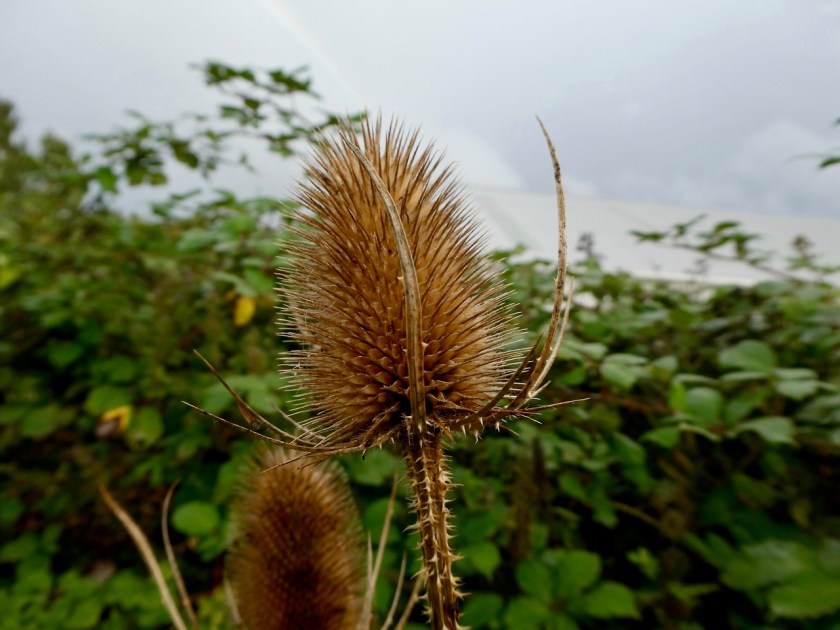
On the old cement works bridge, teases grow well every year, and this year there are a fine crop, looking as prehistoric and alien as ever.

These wonderful weeds go largely unnoticed, but they are fascinating. Taking their name from their utility for teasing out cloth and yarn, they now provide winter food for songbirds, particularly goldfinches.

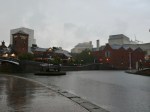
September 18th – Riding through the backstreets of central Walsall, it’s getting distinctly autumnal. I keep thinking it’s too early, but then, we’re very nearly two thirds into September now, so I suppose not.

Here on the corner of Charles Street it looked lovely, and not having been here for many years, it’s changed a bit, too. Last time I was here the flats on the left didn’t exist and there was a row of Victorian factories in some decay. I remember well a cafe here I used to use a fair bit.

Ah well, nothing stays the same and time keeps moving on.

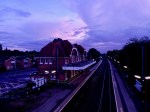
September 17th – By the time I arrived at Shenstone 30 minutes later, the rain and skies had cleared and there was a beautiful violet sunset, which lit my muse of Shenstone Station beautifully in the dusk.

Riding back to Brownhills, I screeched to a half to avoid someone in the road – a full grown, large adult toad, who was healthy and obstinate in the way that gets so many of these unfortunate creatures run over by vehicles.

I pulled out a tissue, and despite his protestations and jet of defensive urine, popped him to safety in the grass verge.

I stop for toads, great sunsets and often for no apparent reason whatsoever…

September 17th – I left at lunchtime and headed to Wolverhampton, hopping on to the canal at Wednesfield, then heading to Tipton at Horseley Junction. I was going to Tipton Canal Festival, a do I’d heard great things about but never been to. 

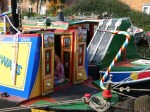
Despite the periodic rain, there was bright sunshine too and it was indeed a great event – more on my main blog later in the week. From Tipton, I meandered on the old line into Birmingham via the Toll House Loop, past the M5 viaduct with it’s maze of fascinating scaffolding and derelict dignity of Chance Glassworks.

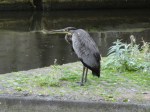
The cats stayed out until the rain came, and the weather worsened as I approached Birmingham. The peculiarly black, wet heron summed up the feeling of the waterfront at Gas Street perfectly. Is it common for herons to be so black?

By the time I reached Aston the light was failing, the pavers on the towpath were treacherously slippery and the rain was penetrating, so I hopped on a train to Shenstone.

A great ride, despite the weather, that reminded me of why I love Birmingham and the Black Country.
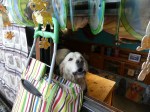
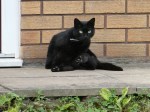
September 16th – I was being watched at Catshill Junction.

My observer was reluctant to make himself known.

The small, black and white cat, barely out of kitten hood, was studying me closely from over the narrows. I was clearly not to be trusted. Monitoring the neighbourhood is a very grave task.

I look forward to making his acquaintance again. 

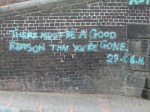
September 16th – A frustrating daytime of delays and faffing before a decent night out with family. I was in Walsall getting – of all things – parts for the car. In Ablewell Street, I stopped and looked at a sign I’d passed many times, and always amuses me.

I know it’s an organisation (and a worthy one at that) but the sign is almost random in it’s minimalism and in context of such a busy urban place, perfectly pitched.

I love it. I needed breathing space, so I took five minutes and thought about the serendipity of the sign.

September 15th – A bad day in many ways, when not much seemed to go to plan. It wasn’t very bad, just loads of minor irritations – and the weather; occasionally sunny and deceptively warm, but at other times almost painfully chilly, as if winter’s fingers were starting to get their grip on things.

The first tinges of the oncoming cold and dark are always the hardest, and this year they’ve come a lot sooner that I expected – but we have kind of got used to Indian summers in recent years, so perhaps this is a return to normal.

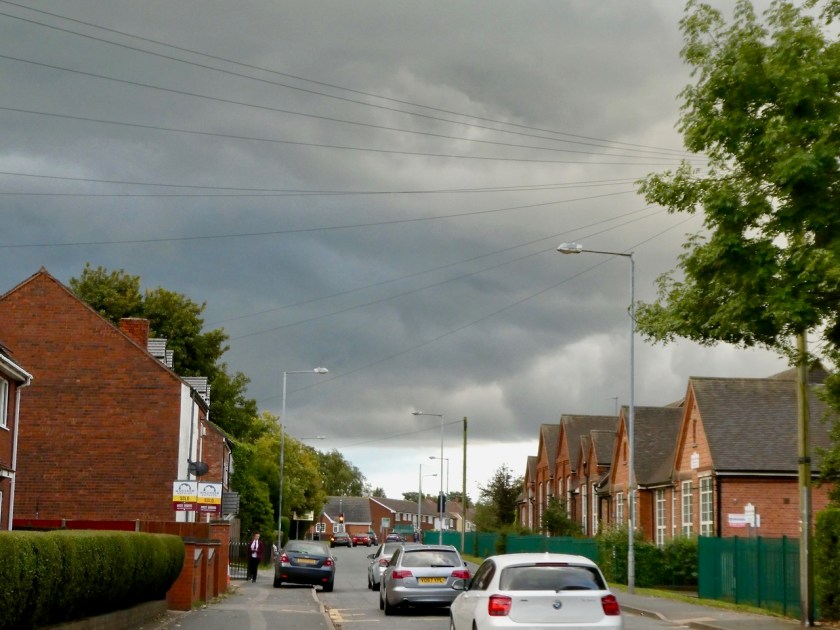
I came back from work in heavy, intemperate traffic having to make a call near Streets Corner, and all the while the skies to the south were showing evil intent. 

When I got home, mercifully before the rain came – I realised how glad I was to be back.

Some days, home is the best place to be.

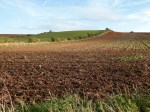
September 14th – Further on, still nestling in green, the countryside of Stonnall is beautiful. The harvest is largely over, with just maize and potatoes left in the fields, and the machinery one now sees in the lanes is for ploughing, harrowing and seeding. Near Stonnall itself, the oilseed rape fields are already growing a new crop.

And so, the seasonal wheel turns. As the cold, darkness and winter come on, these fields will slumber until reawakening in spring. It’s all part of the cycle, and the cycle is round.

It’s not been a bad summer. Just wish it had been longer…

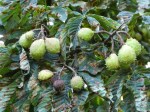
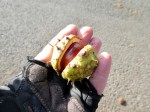
September 14th – A real sign of autumn, my first conker finds of the season, and this year it looks like there’s a large, voluminous crop waiting to fall to earth.

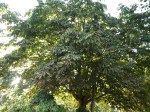
This tree, spotted in the backlanes of Stonnall was laden, and the fruit fresh from the husk as beautiful and shiny as ever one could wish, despite the tree being hard-hit by leaf miner.

Like most men, there is an inbuilt genetic urge to collect fallen conkers and I still can’t pass them in the road without popping a few in my pocket.

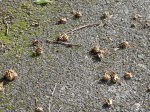
September 13th – Also falling from trees now and altogether less of a hazard are the knopper galls, the genetically mutated acorn-cum-insect-cocoons that are bastardised from the normal oak fruit by the knopper wasp.

These seemingly dead, spent galls will most likely have larva inside them and they will overwinter in the fallen galls before boring their way out in spring – although those dropping in vulnerable positions like these on the footpath will be lost under feet, cycle tyres and to the wind and elements.

It’s not until you think about it you realise what a high rate of attrition there is with such things – just how many larva are lost and how this must affect the fecundity of the knopper wasp as a species.

Remarkable how they survive at all.