April 27th – Spotted passing through Telford, a concrete pump unfolding and deploying for use.
Fascinating and very clever items of plant. The gentleness, care and grace of the operator has to be complimented.
(Source: https://player.vimeo.com/)
April 27th – Spotted passing through Telford, a concrete pump unfolding and deploying for use.
Fascinating and very clever items of plant. The gentleness, care and grace of the operator has to be complimented.

January 9th – In Kings Hill, after many years of dereliction, I note someone has been working on the former Scott Arms pub. Like it’s namesake in Kingstanding, the once popular house had fallen out of favour and closed some time ago, becoming nothing more than a blot on a changing urban landscape.
This pub used to be rammed lunchtimes when there were big factories nearby – Servis and Exidoor to name but two; but in these days of workplace alcohol bans and with the workshops now housing, there was no business to keep this pub going.
I’d wager it’s future is probably flats, or as a house of multiple occupation, looking at the way the upstairs windows have been fitted. Whatever it is, I doubt the Scott Arms will ever serve ale again.
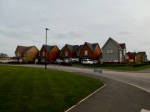
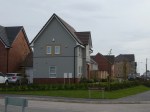
October 31st – Passing down the Darlaston Road to Wednesbury over Kings Hill, you realise that the area is changing. While it’s still very industrial, a couple of the old, large factories here have been replaced by new build housing.
The old Exidoor factory that made panic bolts was lost to apartments some years ago, and over the last couple of years, a pleasant enough, but unremarkable estate has grown on the site of the former Servis domestic appliance factory pretty much next door.
Servis was a household name, started by nearby power press manufacturer Wilkins and Mitchell who are also now gone; they made passable washing machines and the like which were functional, and often very innovative (The Servis Quartz was the first ever electronically controlled automatic washing machine) but suffered from poor quality and reliability.
Gradually outsold and outclassed by competitors due to the traditional British twin failures of lack of investment and corner cutting, Servis fell from UK ownership to various international owners before finally collapsing.
The works, which once even had it’s own brass band, fell silent, was demolished, the ground reclaimed, and now houses sprout from where the ground once shook under the blow of heavy presses.
Such is the story across modern Britain. We are in the middle of great change.
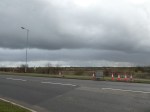


March 5th – Back to the wet, blustery weather. Escaping after a period of spannering the bike in the afternoon, the rain held off as I rode to the Orbital Centre at Bridgtown on an errand. I used the new road that curls through the industrial area that’s being developed there. It’s fast, but soulless.
This is a good area for such development – former brownfield, with mining and historical contamination issues, this land is scarred, ugly and ideal for the warehouses and factories it’s sprouting. But bless me, it’s a dull ride.
Nothing is on a human scale. Everything built here is huge. Everything is massive, and punctuated by huge amounts of open space.
Modern development is a curious thing.
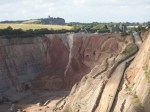
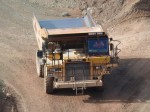


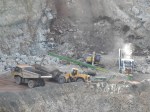
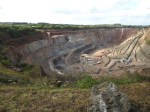


September 2nd – Pleased to see the vegetation has been cut back, restoring the fascinating view of Cloud Quarry from the Cloud Trail, near Worthingdon on the Leicestershire/Derbyshire border.
It seems like a well run quarry, mining limestone for a variety of industry. Everywhere you look machines are busy moving, breaking or grading stone, and some of the driving on the shelves and roads is very impressive.
I could watch this for hours.
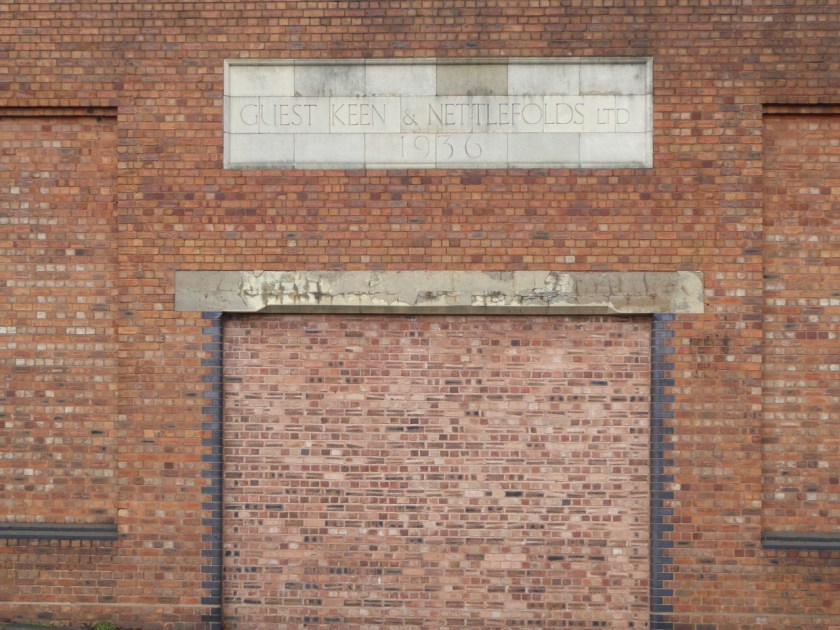
February 23rd – On a factory wall in Darlaston, a plaque recording the name of Guest, Keen & Nettlefolds, and a date of 1936. This was GKN, in their heyday, just before the outbreak of war. This place may now be a shadow of its former self, but this is a history Darlaston can be proud of: screws, nuts and other fastening components came out of Darlaston by the million until the late 1970s, and held the engineering of the world together.
GKN have long since gone from here, but some of the products they made are still created here by a German company.
Today, Darlaston’s industry hangs by a thread, not upon it. But these streets still resound to the sounds of industry living and breathing – and it still makes me proud to experience it.
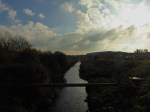

November 18th – Not all change is for the worse. Here at James Bridge, on the Walsall-Darlaston border, the road between the two crosses a river: the Tame, in it’s nascent stages. At Besot, a mile or so away, it’s in confluence with the Ford Brook, and becomes the major watercourse of Sandwell and North Birmingham.
This river used – even here – especially here – to be nothing but a foul conduit for industrial effluent; but the industry that discharged into it has either gone, or been forced to clean up it’s act, and the river now runs relatively clear.
Today, mallards drifted in the strong flow, basking in the hazy but warm morning sun. This was unthinkable even a decade ago.
I never thought I’d see this waterway clean.

December 10th – If I’ve got time, when cycling to Darlaston, I like to hop onto the canal. It’s a quieter, more interesting and contemplative route, and depending how much time I have dictates where I join the towpath. Today, I was running a bit tight for time so I left it until Bridgman Street, in the industrial centre of Walsall. This is an area of small units, some old, some very new. About ten years ago, it seemed the industry here was threatened with encroaching apartments and gentrification, but the credit crunch saw to that.It’s generally a thriving, humming area with frantic commerce of the daytime being replaced by an eerie desolateness at night.
The view from the canal bridge is quite good, if not beautiful, showing many of the architectural and development phases of Walsall. Interesting to note that you can now see St. Matthew’s Church from here, a sight impossible until the BOAK building burnt down last year.
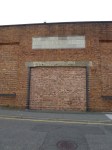
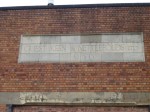
August 18th – It’s arguable that the most powerful economic force in the development of modern Darlastion was GKN, or Guest, Keene & Nettlefolds, a fastener manufacturing company that, until the 1980’s, loomed large in the Black Country industrial psyche. GKN had massive factories in Eastern Darlaston along Station Street, and companies that supplied them and competed were attracted nearby by the availability of skilled labour – Companies like Charles Richards, Kinnings Marlow and Deltight. GKN, of course, are still a massive powerhouse in British engineering, yet in the 1981, decided to end fastener production in the UK. Tens of thousands in Darlaston and Smethwick were made redundant. These were not just factories, but communities, that had their own doctors, carpenters and decorators on site. The National Blood Service used to come here for days on end, and blood donation was seen as an easy break by many of the workers who donated blood.
Here at Station Street, the GKN buildings remain, now housing ZF Lemforder and Caparo, both shadows of the manufacturer that abandoned Darlaston to the Wolves. GKN’s footprints are all over this town, and ingrained into the social history of this proud place.
 BrownhillsBob's #365daysofbiking