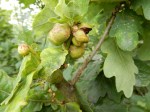
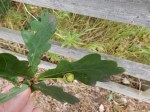
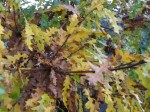
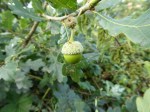
June 29th – Spotted on the cycleway near Telford station, this oddly tortured oak tree. Generally with a healthy appearance, look closely and the tree is covered in insect galls, whereas the acorns that it has grown are oddly mutated and tiny. The leaves also seem subject to some kind of leaf miner attack.

I feel sorry for the oaks – they seem far more susceptible to such attacks and diseases than other trees. I’m not arborialist – is there a reason why the noble oak suffers so very much?

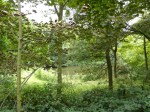
June 10th – Passing Goblins Wood (or Coppice Woods, for the hip modern kids out there), I noted how beautiful they looked. This mostly deciduous, well managed woodland is very old and suspect the only local remnant of the traditional English oak and holly copses that once dotted the area.

These woods, and the trees therein have seen many seasons, and every summer they look superb. Long may they remain (and they are protected by law now, too.)

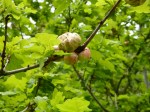
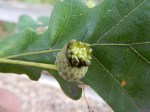
May 29th – I don’t know why, but I find these oak galls a bit horrible. They are distorted leaf buds, into which a wasp injects it’s egg and a chemical which causes the tree to grown the gall instead of a leaf stalk. The larva lives within the growth, feasting on it. When mature, the wasp eats it’s way out and the life cycle continues.

This tree on Clayhanger Common is peppered with these tumour-like galls – they look like fruit. The gall doesn’t harm the tree particularly, but it’s a very visible parasite.

there are many different types of gall wasp, all with different methods and growths. I’ve not seen this one before, and am unsure what it is specifically.

Nature can be very odd sometimes.

February 14th – A day spent sleeping, relaxing, and catching up. I had business in Stonnall in the evening, so nipped down there. Progress was slow. I was still tired.

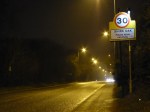
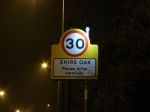
On the Chester Road just past the houses – at the spot once colloquially referred to as ‘death mile’ or ‘mad mile’ after so many accidents – new speed restriction signs have appeared. ‘Please drive carefully’. I’ve never understood this rubbish, personally. 

(Death Mile became much, much safer after the road was modified in the 1990s.)

For starters, much of the traffic passing will be too fast to read anything other than the restriction; and secondly, who the hell decides to drive with wicked abandon only to later correct their behaviour because some quango or councillor decided to ask them to drive nicely in 180-point Helvetica Black?

There is something interesting here, though. That sign didn’t originally say Shire Oak; that legend has been added on a foil applied over other text, which could possibly say ‘Brownhills’, but I can’t decide. 

Are the folk on the Hill too posh and are now pushing for independence? In these straitened days, does anyone really care that much? And before the whinging starts, Shire Oak is indeed in the parish of Brownhills. 
November 14th – After a late night, an very early start riding into the wind in horrendous rain. It was probably the worst ride for years. The waterproofs kept me mostly dry, but I arrived drained and down in the dumps.

Out and about popping to the cafe in the morning after the rain stopped, it was nice to see the last remnants of autumn hanging on – bright red, rain-glossed berries and beautiful yellow oak leaves cheered me no end; as did the smell of wet, fresh earth, making a pleasant change from the normal metallic scent of the Black Country.

After a good butty and a bit of space, the day improved.

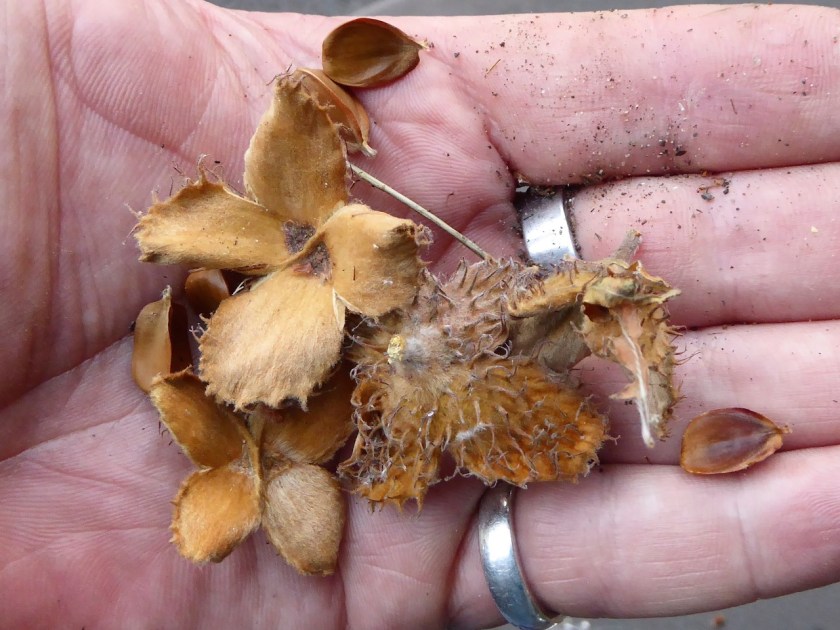
September 23rd – Labouring up Shire Oak Hill at Sandhills, a familiar crunch crackles under my tyres. The beech mast is thick this year, and it’s been a good year for beech nuts.

The husks are hard, prickly and dry as old bones; the little brown nuts shiny and hard. Some years, the nuts are fatter and more oily than others, and this is part of the growing cycle of the tree, not a factor of the weather. Edible but harsh, they were used as a substitute for coffee in wartime and gave their name to a chewing gum.

I collect a few, split them open with a pocket blade, and suck out the kernel, and chew them determinedly for the remainder of my journey. 

A palatable taste, not unlike a slightly sharp hazelnut. But it’s hard work to get a decent mouthful!

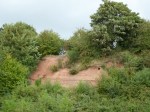
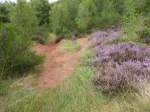
August 30th – I don’t go to Shire Oak Park nearly enough. This Local Nature Reserve, which was once a sand and gravel quarry exploiting the bunter sandstone ridge on the crest of Shire Oak Hill, is a wonderful and rare place. It’s teaming with wildlife, from rabbits to amphibians, mustelids to owls. In this sandy, sheltered enclave, deciduous trees like oaks and birch (and even the odd maple) are thriving, and the outside world seems a long way away.

The reserve is maintained by Walsall Council and on this dull Saturday afternoon, it struck me how clean and litter free the place was. Like all such spots, there’s occasional nuisance from ASB and the odd idiot, but this is a lovely, little known place.

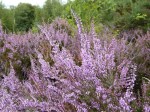
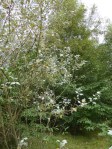
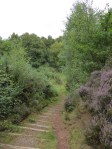
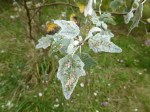
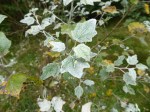
The heather in bloom is gorgeous here, but as with everywhere else, the oaks have had a bad year, with leaf miners and a lack of acorns startlingly evident. Also, I was puzzled by the white appearance of the unrecognised shrub I spotted by the main steps. Can anyone help? Is this disease, pest or normal?

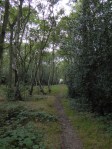
August 20th – In late summer, in an overcast moment, Coppice (or Goblin) Woods between Walsall Wood and Shelfield are silent, dark and beautiful.

I think this is probably the oldest oak and holly deciduous woodland for miles and miles around. This is very traditional British woodland, of which there is precious little left.

If you fancy a walk out this weekend, why not pop down and explore it?

August 5th – Another saying my Grandfather used to use a lot was ‘It’s always a good year for something.’ On this, the old man – who lived life much more connected to nature than I – was bang on. Every year, every season, is detrimental to something and benificial to something else.

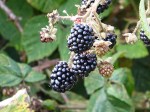
This year we have an absolute wealth of early blackberries. They, sycamore,  horse chestnut and beech appear to have done very well indeed. Oak and fruit seem to have had a very bad year. This is the first acorn I’ve seen – last year, the boughs were heavy with crab apples, damsons, cherries and acorns. This year, very few. Rowan, Hawthorn and cotoneaster seem to be doing reasonably well, though.

I guess it’s just how the weather falls. One late frost and the fruit crops are ruined…