
July 15th – Yes, well done – that’s how headphones generally work.
Telford railway station billboard on a grey morning. Advertising eats itself.
July 15th – Yes, well done – that’s how headphones generally work.
Telford railway station billboard on a grey morning. Advertising eats itself.

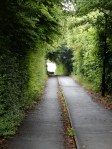

July 14th – Called to Telford mid morning in soft rain, I was struck by how green and tunnel-like the cycleways to Hortonwood have become. The council here cut so far up the hedges, but the upper boroughs overhang and form an almost complete arch. Riding down them in even this grey daylight makes them an emerald delight, but in sunlight, they are magical green pathways, lined with foliage, fruits and flowers.
Beauty in the everyday.
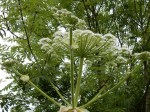

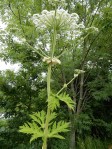

June 26 – I’ve not had to go to Telford for ages, and was looking forward to my trip there today to check out the flowers growing on the cycleways, which are always a bit different to the ones I’m used to. They didn’t disappoint.
In the short run from the Station to Hortonwood, I spotted an interesting orchid, cornflowers and this spectacular, but dangerous giant hogweed.
The hogweed, a good two feet taller than me, is a plant containing a sap which burns human skin by neutralising natural UV protection, causing prolonged, and slow to heal burns – effectively very severe sunburn. It’s very easy to get hurt by it, so I steered well clear (and will notify the council of it’s presence). It’s an imported plant that’s been gaining a strong foothold here.
Beware. It may not be an actual triffid, but it’s pretty nasty.
Telford. Never a dull moment.
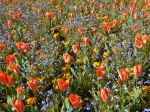
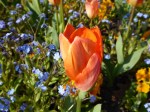
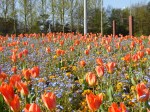

April 21st – A tradition, now, like the waste ground at South Winston Station, is the flowerbed at Telford. Pretty much all year round this planter is a joy. At the moment, gorgeous tulips, lobelia and primroses.
Just the thing to perk you up waiting for yet another delayed train…
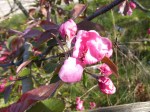
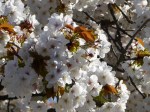
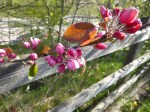
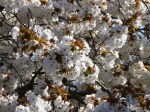
April 20th – And in Telford, all along the cycleways from Stafford Park to Hortonwood, blossom – of all varieties. A horrid job today that I really didn’t fancy, but brightened on the way by the most beautiful spring flowers, azure sky and warm sun.
Not bad for a Monday, really.


November 19th – I forget every year how good Telford’s roadside verges are for fungi. On the backroads and industrial estates were people rarely walk, the mycology goes undisturbed, and a huge variety grow.
On a cold, dew-laden morning, a variety of Melanoleuca, a large family of toadstools which are beyond my ability to tell apart. I love the bleach-white gills, and the way they’ve split under their own weight.

August 12th – This is strange. I spotted it growing in the thicket by the cycleway in Telford. The plant itself looks like maybe a rose or some kind of bramble, the the growth ar the top is totally alien to me.
It’s about the size of a golf ball, maybe a bit bigger. Is it some kind of parasite, like an oak gall? Genetic mutation? Or even some kind of uncommon species?
Help invited… it is kind of beautiful.
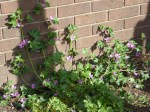
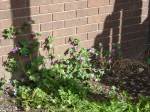

August 11th – I nipped to Telford early to make a quick adjustment, and returned within the hour. At the station, glowing in the sunlight on a small patch of forgotten earth, these beautiful purple flowers.
All they want is to be noticed – and sometimes it’s the little stuff that makes life so fine.


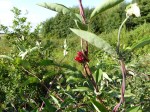
July 30th – It still seems too early to me, but it’s the time of the fruiting and berries now. I’m very familiar with the sticky red berries of honeysuckle – the glaze attracts dust and grime and makes them look grubby – but birds and bugs love them, although they’re mildly toxic to humans.
The white berry here I’m familiar with, but have no idea of the name. These used to grow on the front of a house I’d pass on the way to school, and the berries popped delightfully when thrown at the ground; this is what’s making me think they’re early. I’d have been plucking them in September, at the start of a new term. It’s barely the beginning of the summer holidays right now.
Anyone know their name?
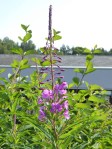
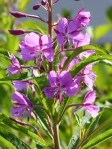
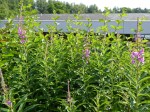
July 2nd – The onward march of summer means more purples – the urban wasteland warriors that are willowherb and buddleia come into bloom around now. This willowherb – or old man’s beard – is growing well at Telford Station near the overpass, and is a welcome splash of colour in an otherwise dull patch of scrub.
After flowering, this tall, distinctive and very common wasteland plant forms wind-borne seeds that will drift on the breeze and fill the station with white fluff.
Good for birds and butterflies, both plants grow well in urban areas and spots either beyond the reach of man, or out of his sight. They are a testament to the tenacity of nature.
 BrownhillsBob's #365daysofbiking