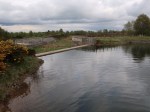
April 28th – A grey, cold afternoon at Chasewater with little to commend it: On a quick spin out shivering and cold, they light was hauntingly grey over the lake. I notice the water level is falling gradually now with it now being about 75mm below the outfall spillway weir.

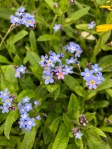
The gorse is beautiful, the hedgerows verges and thickets were alive with flowers, birds and wildlife, but there was little colour because of the awful weather.

Come on spring, we won’t mind if you wake the sun up!

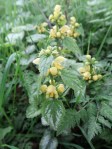
April 27th – A mystery finally solved. I first noticed this patch of what appear to be yellow dead nettles in Footherly Lane a few years ago. Every spring they return, and I don’t think I’ve ever seen them anywhere else.

This eye-catching yellow display is absolutely gorgeous and fascinated me for the delicate colour and intricacy of the flowers.

After asking online, it turns out the plant is Yellow Archangel or Lamiastrum galeobdolon and indeed is of the same family as the dead nettle, and a staple of our ancient woodlands.

What on earth did we do before being able to use the collective hive mind of the internet for plant identification?

April 25th – One of the sadnesses of the season is how short lived the blossom is – it’s there, and gone in a blaze of colour, then shed petals and confetti, then… nothing. A more transient example of the season’s wheel you could not find.

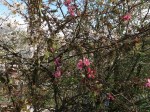
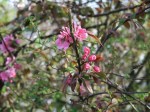
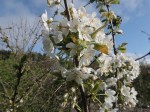
At the moment, the blossom is just starting to end, but passing these two intertwined trees on the cycleway to Priorslee in Telford always fascinates me as it looks like one tree with two different colours of blossom.

I love how, even when fresh, the pink one looks like bright but tattered tissue paper.

Such a lovely, but all to quickly passing, time of year…

dry-valleys:

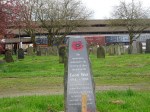
“This is the most interesting place in the world to a Birmingham man” Radical Joe Chamberlain, permanent resident at Key Hill.

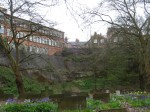
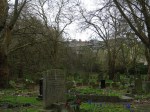
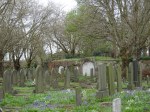
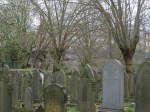
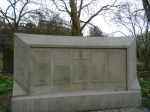
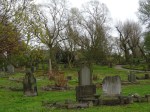
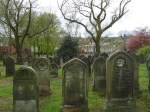
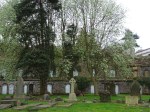
At Key Hill (1-6) and Warstone Lane(7-10), twin cemeteries and Grade II listed sites incongruously sited in the middle of the Jewellry Quarter, Birmingham.

Lack of space at traditional burial grounds in churchyards such as Saint Phil’s, and the growth in the nonconformist population who preferred to avoid Anglican cemeteries (or were forbidden to bury their dead there!) led to the establishment of the Birmingham General Cemetery in 1832, which soon became the resting place of mainly nonconformist citizens, later renamed Key Hill (1-6).

So many pioneers of industry and science are buried here that EH Manning deemed it “the Westminster Abbey of the Midlands”!

In 1848 the Anglicans realised they could no longer rely on Saint Phil’s and parish churchyards, especially in the age of cholera, and so constructed their own cemetery, very nearby, in a disused quarry at Warstone Lane (7-10).

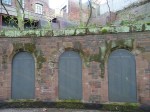
What I find most fascinating is the use of (1,2,9) catacombs; as the issue of space clearly hadn’t gone away given how small these plots are, there began the custom of burying several generations of a family in catacombs which are built into the hillside; that at Warstone is three stories high.During wartime these were used as air raid shelters and temporary homes for people whose permanent residence had been bombed.

Speaking of which, there are (6,10) many war graves here; 46 at Key Hill and 64 at Warstone Lane, though these are among the last to be buried here; both are long since closed to new burials (officially closed in 1982 though both had barely been used in decades), which makes them interesting memorials of two civilisations that now seem to have more in common with each other, though they were bitter rivals at the time, than either has with 21st-century life.

They thus had little of the influx of Catholics, then Muslims, that makes a place like Handsworth (opened 1909 and still extant) so different; this, and their small space, has kept them sealed off, despite being a stone’s throw from Jewellery Quarter station. Those who are commuting there today won’t literally end up here, but might benefit from a visit to remind them that their bustling isn’t all there is to the Jewellery Quarter or to themselves!

April 21st – Another wonderful spring flower coming into bloom is the oilseed rape in the fields. All across the rural landscape this vivid yellow brassica is turning the landscape yellow.

The smell is wonderful and it’s just started. The fields are alive with bee buzz and birds come for the feasting bugs. 

I love the drama and beauty of this curious crop

April 21st – I don’t think I’ve ever known a spring like this – someone has fired a starting gun, and on this generally sunny afternoon ride to Burton so many flowers were either out or coming out that it was astounding.

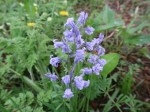
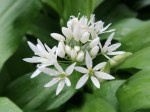
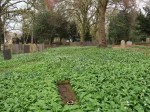
I have never seen hawthorn in flower at the same time as blackthorn. The wild garlic is out when there are still daffodils. Bluebells are about too. It’s absolutely gorgeous out there.

A long, sunny afternoon ride, stopping to inspect the flowers was just what I needed.

How I love this time of year.

April 20th – Returning home from from Shenstone on a gorgeous evening, passing lanes full off other cyclists whose general absence was noted when the weather was not so lovely, I stopped to check the familiar and have a rest.

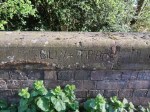
There is a piece of scratched graffiti amongst many others in the soft sandstone of Footherley Lane’s brook bridge. It says ‘Billy + Tracee 30-4-83′.

I remember this when is Wass freshly cut, when I was a kid exploring these lanes. Coming soon will be the 35th anniversary of this act of what was presumably, love.

In this beautiful spot, Billy and Tracee recorded their love, and I often wonder if they’re still together, and remember this.

I do hope so.

April 20th – And so, spring is on her throne at last and summer is booting up.

The speed at which this has happened this year – in no more that a week – has been startling and rather wonderful.

Every day new discoveries, and whilst yesterday, the blossom was just starting, this morning it was showing strongly.

How long I have waited for the light, the warmth and the wonderful burst of life. It was worth the wait.