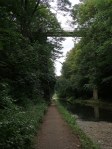
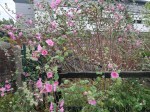
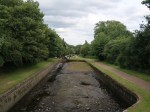
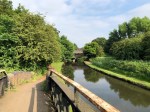
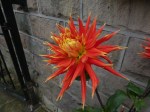
June 15th – I really have got the taste for Birmingham and the Black Country’s canals. Another trip into the city after work on a grey, occasionally drizzly afternoon rewarded me with flowers, great bridges and interesting views.

You just know that if life were a video game, there would be a secret something behind that brickwork.

Really enjoyed the Tame Valley Canal today.

June 8th – A lovely evening after a grey, dull day so I fell out of work and hit the canals into Birmingham, then over Sandwell Valley Park to Smethwick, then back through the City Centre, a curry in Aston and home.

The summer really is excellent this year, I must say, and in the unexpectedly golden evening, the canals, city and park glowed beautifully and were beautiful and vibrant. 

I don’t think I’d rather live anywhere else as long as all this is just a short ride away.

May 28th – It was a lovely ride to Staunton Harold and Melbourne, but the North East wind, a feature of most of. the last two weeks, was insistent and wearing, but did blow me home down the Trent Valley. 

The reservoir itself is fascinating, and has much more character than nearby Forewmark, surrounded by denser woodland, and from the Calke end, where the old road disappears under the water, it feels magical and almost private.

Returning home through Repton along the Trent, I found a great bridleway near Ingleby, and the farmland just east of Battlestead Hillretains it’s magic, despite the impending quarrying there. Netherstowe and Lichfield by night are always a joy too.

Considering how poor the weather forecast for the bank holiday weekend was, and despite SUnday’s deadly storms, it din;t turn out too bad after all.
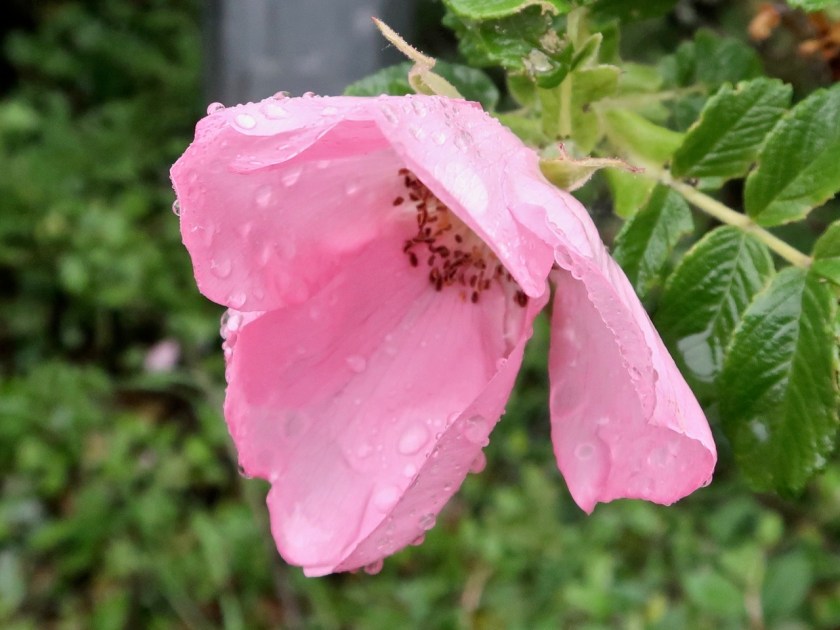
May 25th – A dreadful commute, in both directions. It was the first rainy day for ages, so I can’t complain really by by heck it was wet. I got soaked in heavy rain in the morning, battling my way through standing water and on slippery roads; then on my return in fine, penetrating, all dampening drizzle.

The roses along the cycleway in Goscote looked beautiful on it though.

Hopefully a better day tomorrow.

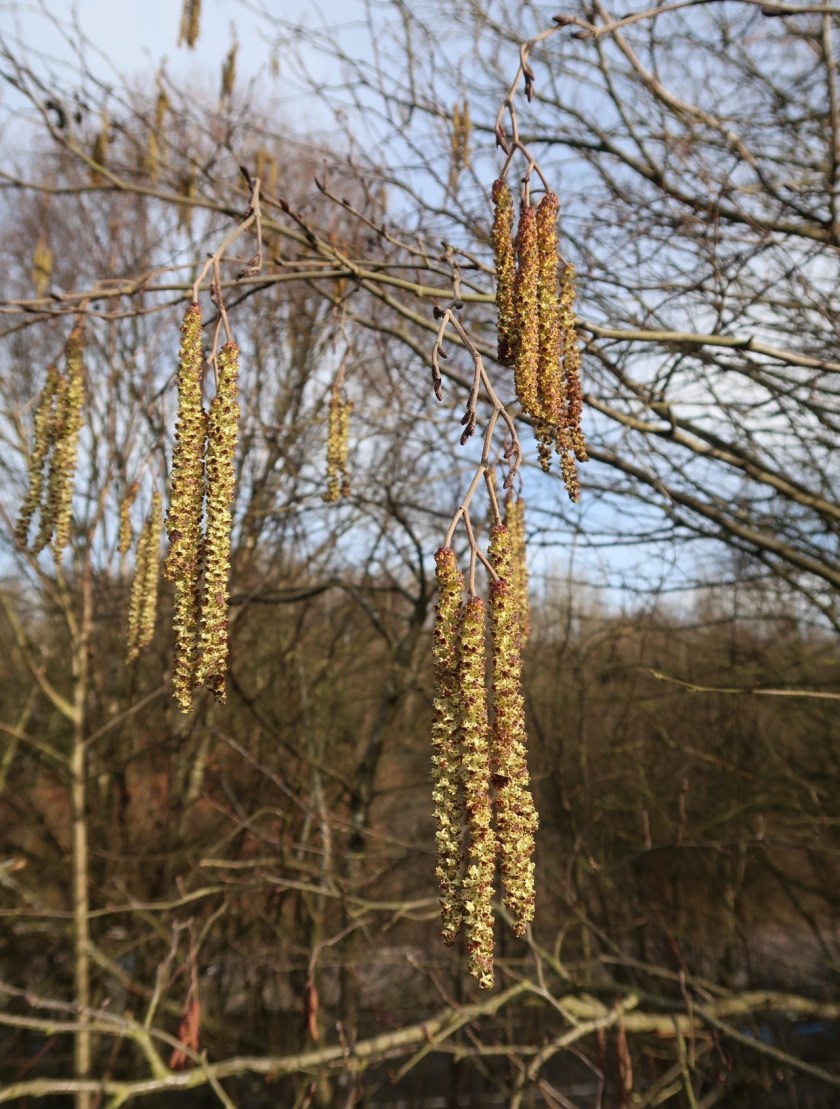
January 31st – One of the sure signs of a change in season from winter to spring is the appearance of various types of catkins, which are most commonly seen at this time of year on hazel trees, or in the case of these long ones, alder.

Alder is curious in that the buds you can see are also flows, the large blooms are male, and those female.

The word catkin is likely to have come from the Dutch Kateken, meaning kitten – due to the resemblance to kitten’s tails.

Catkins emerge this time of year as they’re wind pollinating, and emergence after coming into leaf would hamper pollination.

November 5th – It was very cold compared to recent weeks (although merely normal for the time of year) and overnight rain had drenched the landscape. But the light was good, the sun was out so nothing for it but to head up to Cannock Chase.

The forest is at it’s absolute best right now. Get your boots on and get up there, people.

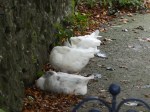
October 6th – For all my (uncharacteristic) shoe-gazing, there was brightness; in the nasturtiums growing from a pavement fissure near a cellar hatch; in the flowers of the River Gardens and it’s rather cheeky robin, and in the swans and their goose-pal napping where once rowing boats were hired. 

The love-lock restriction amused, as you’d need a seriously large one to clamp on the Jubilee Bridge, and the cleverly named coffeeshop made me double take. 

It was an afternoon as English as tuppence, really, and I did rather enjoy the self-indulgent introspection of it.

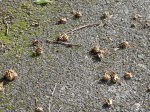
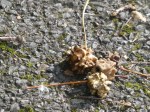
September 13th – Also falling from trees now and altogether less of a hazard are the knopper galls, the genetically mutated acorn-cum-insect-cocoons that are bastardised from the normal oak fruit by the knopper wasp.

These seemingly dead, spent galls will most likely have larva inside them and they will overwinter in the fallen galls before boring their way out in spring – although those dropping in vulnerable positions like these on the footpath will be lost under feet, cycle tyres and to the wind and elements.

It’s not until you think about it you realise what a high rate of attrition there is with such things – just how many larva are lost and how this must affect the fecundity of the knopper wasp as a species.

Remarkable how they survive at all. 

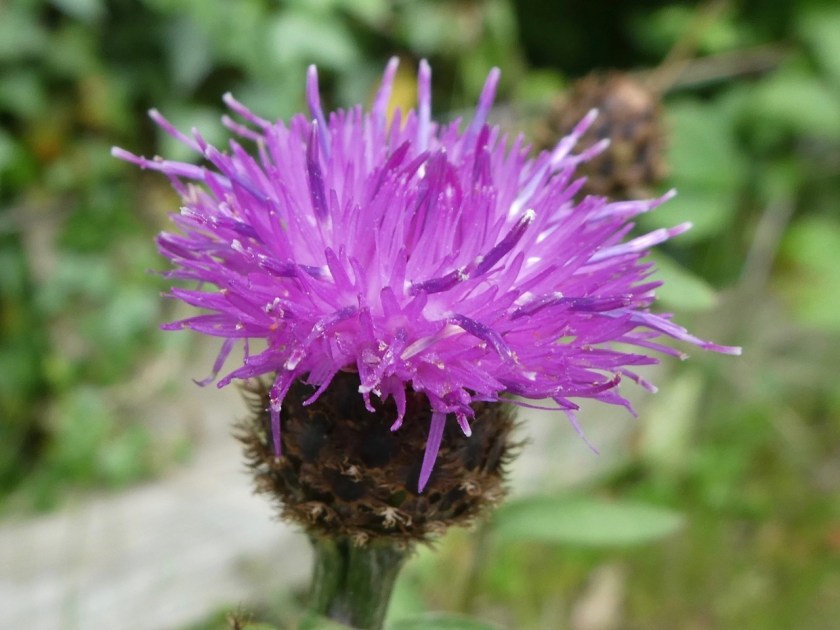
June 13th – Coming to be a common sight about now, a lovely purple flower dots the verges, hedgerows and neglected spaces. I’m fairly sure this is knapweed, and looks very thistle-like, but has no prickles. 
I wonder what the evolutionary genesis of this is – something so similar to another plant, but without the protective defences? Whatever, it’s a really beautiful thing.

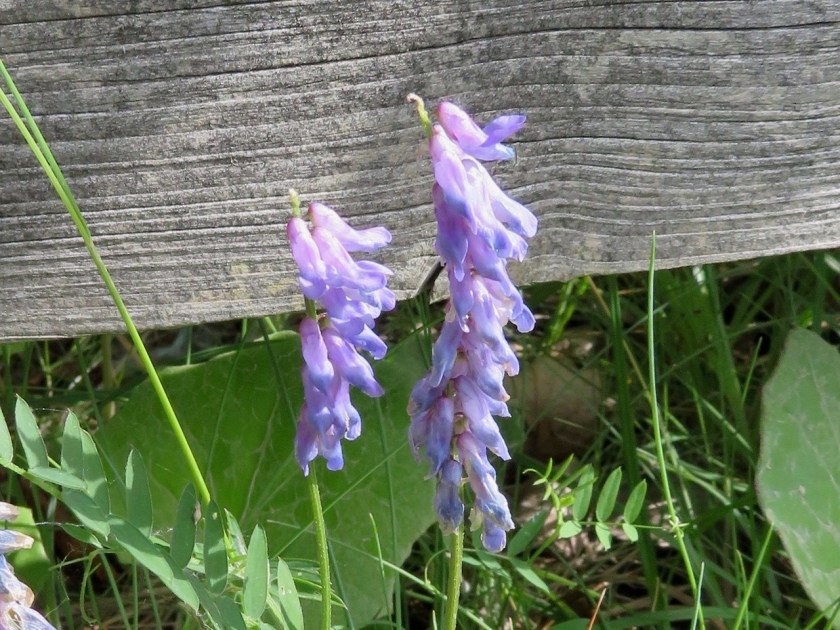
May 31st – Since were in the largely purple phase of flowering now, it would be wrong to overlook this tiny gem. Prolific on grass verges, towpath margins and anywhere with decent light and room to spread, vetch is a gorgeous, long lasting lilac-violet colour and brightens many otherwise dull corners.

It really is a highlight of summer and one I look forward to enjoying seeing.